| Criterion | Chambre d'hôtes | Meublé de tourisme |
|---|---|---|
| What the traveler rents | A room in your home | An entire property for exclusive use |
| Host presence | Mandatory, you live on site | Not required |
| Breakfast | Included in the night's stay | Optional |
| Ceiling | 5 rooms, 15 people | No ceiling of this kind |
| Town hall declaration | Cerfa no. 13566 | Cerfa no. 14004 or registration, depending on the municipality |
| Star rating | Not provided for | Optional, valid for 5 years |
| Tourist tax (2026) | Scale from €0.20 to €0.80 per person per night | Fixed rate per star if rated, 1% to 5% of the nightly price otherwise |
Compliance
Guest roomFurnished tourist rentalRegulationTown hall declarationTourist tax
Guest room or furnished tourist rental: the differences
Chambre d'hôtes or meublé de tourisme: definitions, the limits of 5 rooms and 15 guests, town hall declaration, micro-BIC and tourist tax compared point by point.
Équipe Majordia

A guest room (chambre d'hôtes) and a furnished tourist rental (meublé de tourisme) both host paying travelers, but they are not the same status. The chambre d'hôtes is rented in your own home, with breakfast and your personal welcome, within a limit of 5 rooms and 15 guests. The meublé de tourisme is an entire property that the traveler occupies alone, with no service for you to provide.
This choice is not just a matter of vocabulary. It determines the form to file at the town hall, the registration of your activity, the tax regime that applies and the tourist tax scale your guests will pay. Choosing the wrong category exposes you to penalties, and many hosts who rent a room in their house or an outbuilding do not know which box they fall into.
Last verification of official sources: 5 October 2026. This article is for information only and does not constitute personalised legal or tax advice: check your situation with your town hall and your tax office.
What is a chambre d'hôtes (guest room)?
According to Article L. 324-3 of the French Tourism Code (Code du tourisme), a chambre d'hôtes is a furnished room located in the host's own home, intended to accommodate tourists for payment, for one or more nights, with services included. The text appears in the chapter of the Tourism Code on furnished tourist rentals and guest rooms on Légifrance.
The regulation specifies what this activity involves. According to the regulatory section of the Tourism Code on guest rooms (articles D. 324-13 to R. 324-16), the activity consists of providing the night's stay with breakfast, within a limit of five rooms for a capacity of fifteen people, with a welcome provided by the host. Each room must have access to a bathroom and a toilet, and the rental includes, at a minimum, the supply of household linen.
Three elements therefore recur in the definition:
- the host's presence: you live in the house or in an adjoining building, and you welcome your guests yourself;
- breakfast, included with the night's stay;
- a ceiling of 5 rooms and 15 people.
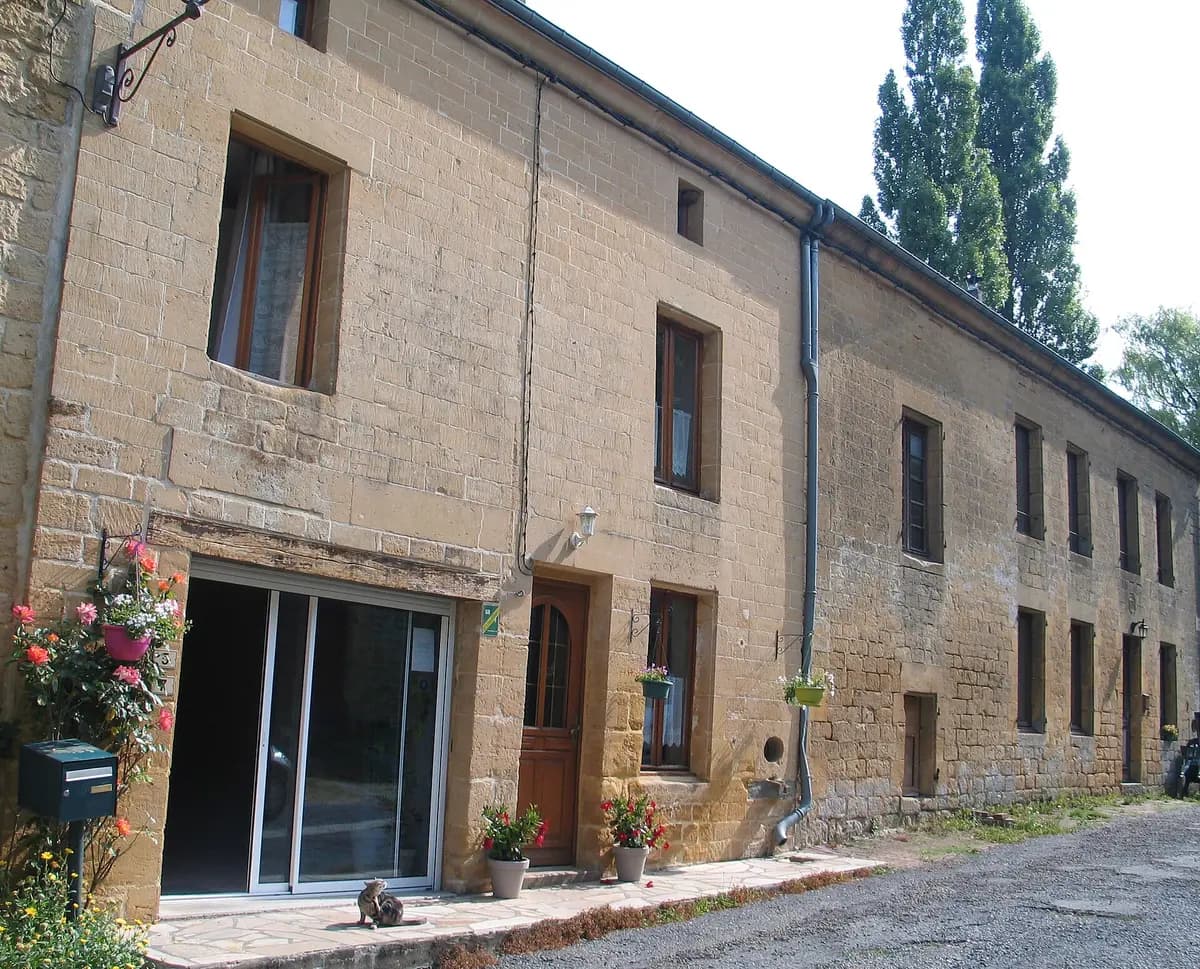
Photo: Андрей Романенко, Wikimedia Commons, CC BY-SA 4.0 licence.
What is a meublé de tourisme (furnished tourist rental)?
A meublé de tourisme is a property, such as a villa, apartment or studio, made available to short-stay guests who do not make it their home, for their exclusive use. The Directorate-General for Enterprises (DGE) describes furnished tourist rentals as distinct from standard leases and from rooms in the host's home, where the owner is present.
The service-public.gouv.fr page on renting a furnished tourist property, checked on 21 May 2026, adds two benchmarks: the same guest cannot occupy it for more than 90 consecutive days, and the property must be fitted with basic furniture and equipment (bedding, hobs, refrigerator, tableware, utensils, seating, storage, cleaning products).
No service is required: neither breakfast nor a personal welcome. This is why the meublé suits remote rental, with a self check-in, whereas the chambre d'hôtes requires your presence.
Chambre d'hôtes or meublé: the comparison table
Sources: Tourism Code (Légifrance), DGE, service-public.gouv.fr, checked on 5 October 2026.
Do you have to declare your chambre d'hôtes or meublé at the town hall?
Yes in both cases, but not with the same form. The chambre d'hôtes is declared to the mayor of the municipality before the first rental, using Cerfa form no. 13566, electronically, by registered letter or at the town hall against a receipt. The declaration states your identity, the address, the number of rooms, the maximum capacity and the rental periods. According to the entreprendre.service-public.gouv.fr page on opening a chambre d'hôtes, failure to declare is punishable by a €450 fine.
The meublé de tourisme is declared with Cerfa form no. 14004, or through registration in the municipalities that have introduced it. In that case, the town hall issues a 13-character registration number that must appear on every listing. According to service-public.gouv.fr, failure to register can lead to a civil fine of up to €5,000. The rules specific to the main residence, day quotas and co-ownership are detailed in our article on the Le Meur law and the registration of furnished rentals.
Attention
These penalties and forms change over time. Before taking any step, check on your town hall's website whether your municipality requires registration of furnished rentals and a national online service.
What about a room in the host's home (chambre chez l'habitant)?
Between the two lies a third category, often confused with the chambre d'hôtes. The DGE states in its answer on the chambre chez l'habitant that a room in the host's home, which is part of the dwelling forming the lessor's main residence, does not match the definition of a meublé de tourisme and is not declared at the town hall. The tourist tax must nevertheless be collected in all cases.
The DGE page on guest rooms also indicates that if you exceed 5 rooms or 15 people, you can no longer use the "chambre d'hôtes" label and fall under the "chambre chez l'habitant" category. If, on the other hand, you rent a complete property for exclusive use, for example a barn on your land, the Cerfa declaration and registration become mandatory again, because it is a meublé de tourisme.
What taxation applies to each status in 2026?
Under the micro-BIC regime, the thresholds and allowances for 2025, declared in 2026, are as follows according to the entreprendre.service-public.gouv.fr page on income from tourist rentals (checked on 21 February 2026):
| Category | Revenue threshold | Allowance |
|---|---|---|
| Classified meublé de tourisme | €77,700 | 50% |
| Non-classified meublé de tourisme | €15,000 | 30% |
| Chambre d'hôtes | €77,700 | 50% |
The chambre d'hôtes therefore keeps the €77,700 threshold and the 50% allowance without any rating, whereas the non-classified meublé drops to €15,000 and 30%. This is a real advantage for a host who rents one or two rooms in their own home. Social contributions, cases of exceeding the threshold and the choice between micro-BIC and the actual regime depend on your situation: see our guide to short-term rental taxation and, if needed, consult an accountant.
Another point regarding status: the entreprendre.service-public.gouv.fr page presents the chambre d'hôtes activity as a commercial activity. According to the DGE, registration in the trade and companies register (RCS) is mandatory for a regular activity since 1 January 2023, through the business formalities portal.
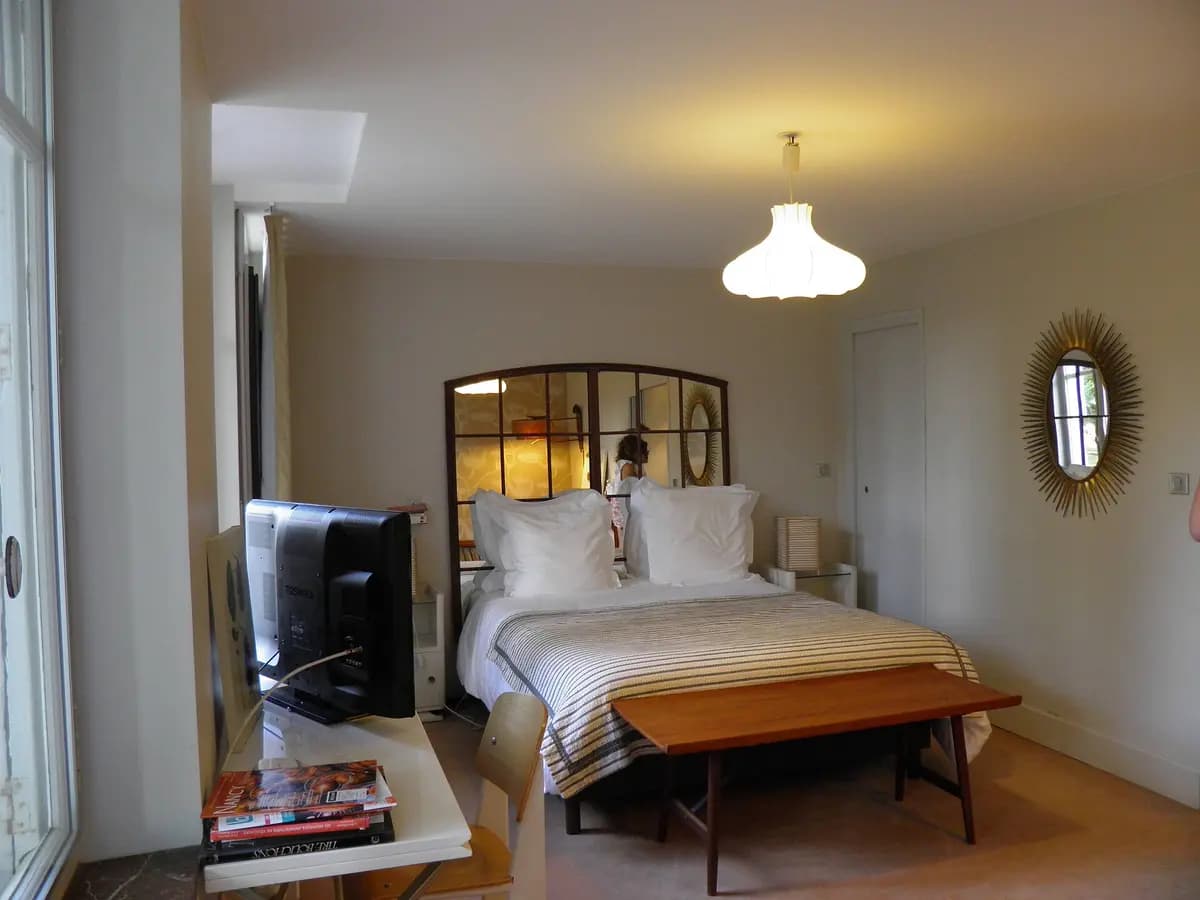
Photo: Gzen92, Wikimedia Commons, CC BY-SA 4.0 licence.
What tourist tax applies to your guests?
According to the entreprendre.service-public.gouv.fr page on tourist tax rates, guest rooms fall in 2026 under a single scale of between €0.20 and €0.80 per person per night, identical to that of a 1-star hotel. The municipality or inter-municipal body sets the exact rate within that range.
For a non-classified meublé, the tax is a percentage of the nightly price, from 1% to 5%, capped at the highest rate adopted by the local authority. A classified meublé, by contrast, pays a fixed rate according to its number of stars. Since guest rooms are not rated, they have only one pricing line. The details of the calculation and remittance are in our article on tourist tax in short-term rentals, and those on rating in the guide to meublé de tourisme classification.
What obligations are common to both statuses?
Whatever your status, some obligations remain the same:
- The police form (fiche de police) for foreign travelers: every tourist accommodation operator, whether meublé or chambre d'hôtes, must have it completed. Our article on the traveler register details the retention period.
- Collecting the tourist tax, including for a room in the host's home.
- Informing travelers: prices must be displayed for the chambre d'hôtes according to the entreprendre.service-public.gouv.fr page, and clear house rules prevent disputes in both cases.
- The table d'hôtes (shared host meal): according to the DGE, if you serve alcoholic drinks with the meal, a licence and training provided for by the Public Health Code are required.
How to choose between chambre d'hôtes and meublé?
The right question is not a tax one first, but a practical one: do you live on site and do you want to welcome your travelers yourself?
- You rent a room in your residence and you prepare breakfast: it is a chambre d'hôtes. Check that you stay under 5 rooms and 15 people.
- You rent a separate property, without living in it: it is a meublé de tourisme. Declare it, have it registered if your municipality requires it, and consider rating it.
- You rent a room with no breakfast or service: you are probably in chambre chez l'habitant, with no declaration, but with the tourist tax to collect.
- You are unsure: ask your town hall, the tourist office or your accountant for advice before the first rental.
How to inform your travelers, whatever the status?
In a chambre d'hôtes, you are present but not available at all times; in a meublé, you are absent. In both cases, the same questions come up: wifi code, breakfast time or self arrival, house rules, emergency contacts. A digital welcome book accessible by QR code answers them for you. With the Majordia digital welcome book, you can display the wifi, door code, useful contacts and emergency numbers in tiles, and the QR code fits in the room or at the entrance.
Majordia automatically translates the content of the welcome book into the traveler's language among six languages, which helps a chambre d'hôtes that regularly hosts foreign visitors. To set up one welcome book per property or per room, the plans are presented on the Pricing page. Our guide to creating the perfect Airbnb welcome book also provides a content outline suited to both statuses.
Key takeaways
Information
- The chambre d'hôtes is rented in the host's home, with breakfast, within a limit of 5 rooms and 15 people (Tourism Code, D. 324-13).
- The meublé de tourisme is an entire property for exclusive use, with no host present and no mandatory service.
- Declaration: Cerfa no. 13566 for the chambre d'hôtes; Cerfa no. 14004 or registration for the meublé, depending on the municipality.
- Micro-BIC 2025: €77,700 and 50% for the chambre d'hôtes and the classified meublé; €15,000 and 30% for the non-classified meublé.
- Tourist tax 2026: €0.20 to €0.80 per person per night for a chambre d'hôtes.
- Beyond 5 rooms or 15 people, you are no longer a chambre d'hôtes.
FAQ
What is the difference between a chambre d'hôtes and a meublé de tourisme?
The chambre d'hôtes is a furnished room in the host's home, rented with breakfast and the host's welcome, limited to 5 rooms and 15 people. The meublé de tourisme is a complete property for the traveler's exclusive use, with no host present and no mandatory service.
Does a chambre d'hôtes have to be declared at the town hall?
Yes. You must declare the activity to the mayor before the first rental using Cerfa form no. 13566. According to entreprendre.service-public.gouv.fr, failure to declare is punishable by a €450 fine.
Can you offer more than 5 rooms as a chambre d'hôtes?
No. Beyond 5 rooms or 15 people, the "chambre d'hôtes" label can no longer be used, according to the DGE, and you fall under the chambre chez l'habitant category. If the property is rented in full, it may also qualify as a meublé de tourisme.
Does a chambre chez l'habitant have to be declared?
According to the DGE, a chambre chez l'habitant in your main residence is not declared at the town hall, but the tourist tax must be collected. If you rent an entire property for exclusive use, it is a meublé de tourisme and declaration becomes mandatory.
Which tax regime should you choose for a chambre d'hôtes?
The micro-BIC applies with a revenue threshold of €77,700 and a 50% allowance, according to service-public.gouv.fr. The choice between micro-BIC and the actual regime, and the calculation of social contributions, depend on your situation: an accountant can help you compare.
Can a chambre d'hôtes be rated with stars?
Not under the official classification of furnished tourist rentals, which covers only meublés. For the tourist tax, guest rooms have a single scale. For the classification of meublés, see our guide to meublé de tourisme classification.
Take action
Start by identifying your status with the table above, then file the corresponding declaration at the town hall before your first rental. To welcome your travelers with peace of mind, create your digital welcome book on Majordia: wifi, house rules and emergency information a scan away, in six languages.
Image credits. Cover: blue-walled bedroom, photo Clay Banks, Unsplash, Unsplash licence. Illustrations: Андрей Романенко (CC BY-SA 4.0) and Gzen92 (CC BY-SA 4.0), via Wikimedia Commons; images converted to WebP format and resized.
All articles
Share:
Free trial
Ready to switch to a digital booklet?
1 month free: card offered at signup (optional). With a card, your complimentary QR code ships free to you during the trial. Your booklet is ready in minutes.
Create my booklet for free


