| Situation | Who installs the detector? | Who maintains it? |
|---|---|---|
| Standard unfurnished rental | The owner | The tenant (batteries, test, replacement if needed) |
| Furnished rental | The owner | The owner |
| Seasonal rental, furnished tourist rental | The owner | The owner |
Compliance
Fire safetySmoke detectorRegulationFurnished tourist rentalERP
Smoke detectors in holiday rentals: owner obligations
Smoke detector, who maintains it, when a furnished rental becomes an ERP: the fire safety obligations of a holiday rental owner in France in 2026.
Équipe Majordia

Yes, a furnished rental let to travellers must be equipped with at least one smoke detector, and you, the owner, must install it and check that it works. This rule applies to seasonal rentals as well as to ordinary furnished rentals, even when you entrust management to a concierge service. A second threshold deserves your attention: above 15 people accommodated, your property is no longer just a furnished rental, it is also an establishment open to the public (établissement recevant du public, ERP).
This guide draws on the laws and ministerial answers that govern fire safety in a furnished tourist rental (meublé de tourisme): the standalone smoke alarm (détecteur avertisseur autonome de fumée, DAAF), how responsibility is shared with a manager, the ERP regime and the practical habits to put in place before the next arrival.
Last verification of sources: 7 October 2026. This article is for information only and is not personalised legal advice: check it against your own situation, with your town hall or the departmental fire and rescue service (SDIS).
Is a smoke detector mandatory in a seasonal rental?
Yes. Law no. 2010-238 of 9 March 2010 made smoke detectors mandatory in dwellings. According to the ministry's answer to written question no. 69140 of the National Assembly (own translation of the substance), every dwelling has had to be fitted with at least one standalone smoke alarm since 8 March 2015.
The text adopted by Parliament sets the rule in article L. 129-8 of the French Construction and Housing Code (code de la construction et de l'habitation): the occupant of a dwelling, whether tenant or owner, installs at least one standardised smoke detector and ensures it works properly. The same article provides that this obligation falls on the non-occupying owner under conditions set by decree, notably for seasonal rentals, hostels, service accommodation and furnished rentals (own translation of the substance, from the text definitively adopted by the Senate, February 2010).
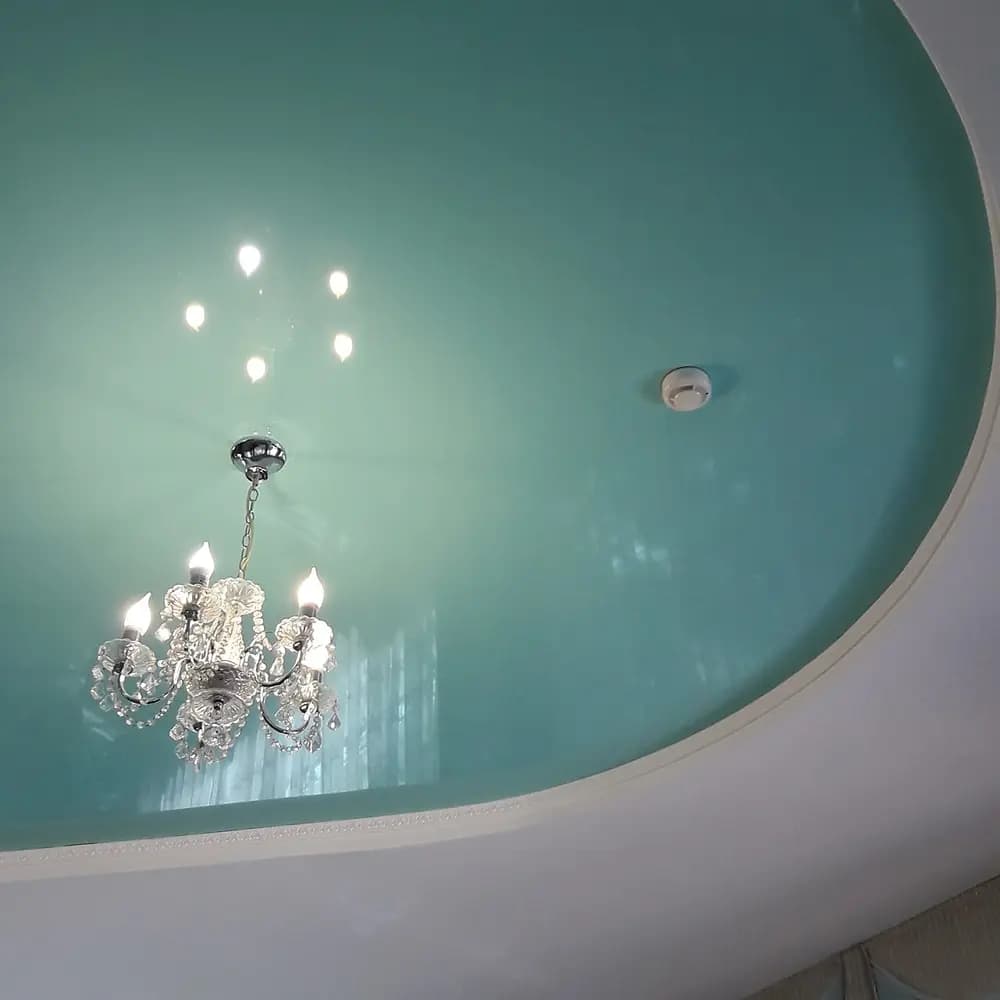
Photo: Georg Pik, Wikimedia Commons, CC0 1.0 licence.
Who installs and who maintains the detector in a furnished rental?
The owner does both. The ministerial answer describes how the law evolved: before the ALUR law of 24 March 2014, installation fell on the occupant, except for seasonal rentals, hostels, service accommodation and furnished rentals, where it already fell on the non-occupying owner. Since the ALUR law, it is the owner, whether landlord or occupant, who installs a standardised detector.
As for maintenance, the general rule for an unfurnished rental (the tenant changes the batteries and tests the device) does not apply to your case. The same answer states that, for a seasonal rental, a hostel, service accommodation or a furnished rental, the maintenance obligation falls on the owner-landlord (own translation of the substance). The owner must also make sure the detector works at the entry inventory when there is one.
Source: answer to written question no. 69140, National Assembly (article R. 129-13 of the Construction and Housing Code cited in the question).
What if a concierge service manages the property?
Responsibility remains with the owner, but it can be delegated by contract. The ministry explains that, when rental management has been entrusted to a property manager, the relationship between owner and manager is covered by the management mandate (own translation of the substance). It is therefore up to the owner to check that the powers granted by the mandate provide for the manager to carry out the landlord's obligations.
In practice, if you use a concierge service, check that your contract mentions the periodic checking of detectors. Our guide on the concierge contract in short-term rentals details the clauses to review.
Which detector to choose and where to fit it?
The service-public.gouv.fr page on smoke detectors, updated on 13 May 2026, gives the technical points to remember:
- At least one detector per dwelling: every apartment or house must have at least one.
- A compliant device: it must bear the CE marking together with a reference to standard NF EN 14604.
- A good location: preferably in the circulation area or hallway (landing, corridor) serving the bedrooms, fixed to the ceiling.
- Several devices if the dwelling has several floors: the page recommends multiplying the number of devices in that case.
- Never in the common areas of a building: installation there is excluded.
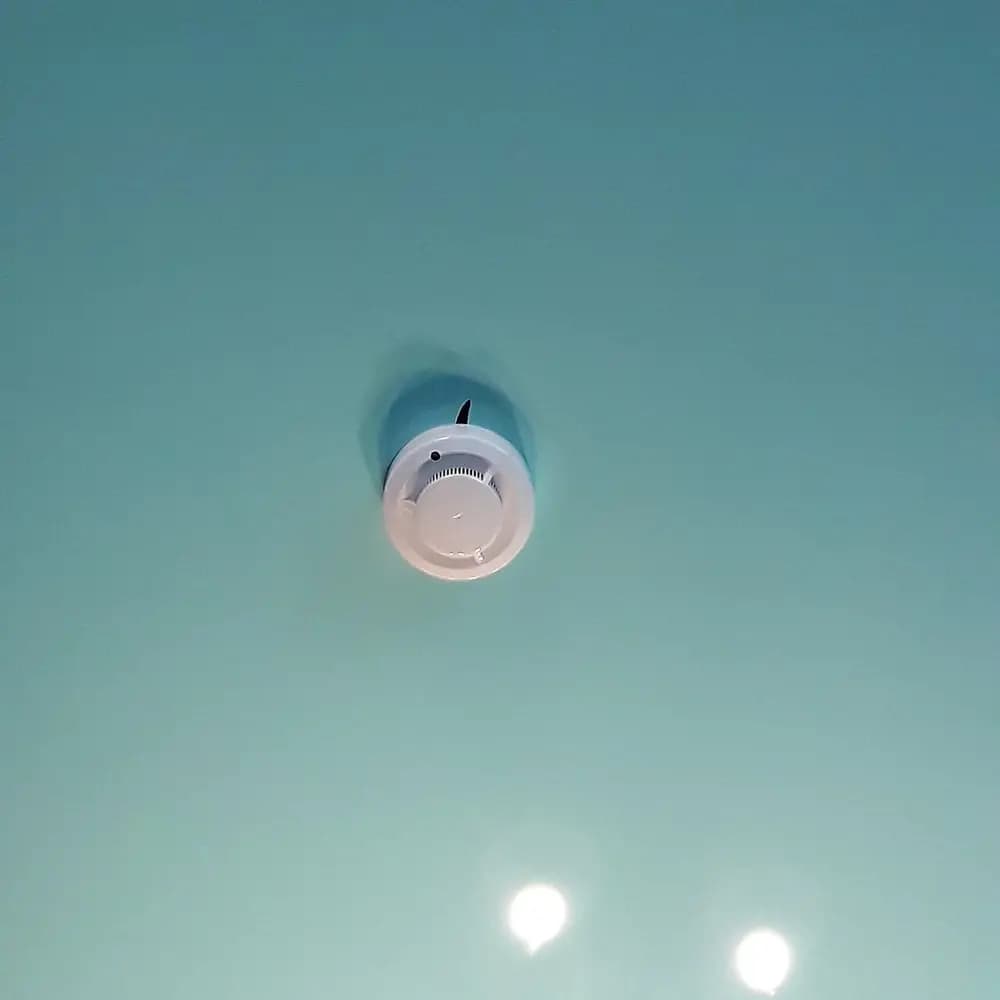
Photo: Georg Pik, Wikimedia Commons, CC0 1.0 licence.
Should you tell your insurer?
The service-public.gouv.fr page states that the occupant must inform their insurer with a certificate accompanied by proof of purchase or installation (invoice, photo, certificate of conformity). In a furnished tourist rental, the occupant is a passing traveller, so the practical step falls to the owner. Keep the invoice and a dated photo of each detector, and check the terms of your insurance policy. Our article on PNO insurance and the host's civil liability reviews the cover to compare.
When does a furnished rental become an ERP?
From 15 people. The definition of the furnished tourist rental in article D. 324-1 of the Tourism Code (code du tourisme) sets no maximum accommodation capacity, but fire safety regulations do set a threshold. According to the answer to written question no. 70095 (answer published in the Journal officiel on 1 November 2016), a furnished rental for more than 15 people is subject to ERP regulations, and the Tourism Code rules and the Construction and Housing Code rules are separate and independent: a furnished rental, classified or not, that exceeds this capacity is affected (own translation of the substance).
The Ministry of the Economy FAQ page on furnished tourist rentals confirms it: buildings or premises used for accommodation that can host more than 15 people are 5th category ERPs, subject to accessibility rules and fire prevention rules (own translation of the substance).
What steps for a group lodging of more than 15 people?
A group lodging (gîte) for more than 15 people is a 5th category ERP with sleeping accommodation. According to the government answer to written question no. 11152 (Journal officiel of 28 May 2024), it is subject to the following requirements (own translation of the substance):
- Works authorisation: issued by the police authority, after the opinion of the competent safety commission, before any works to create, fit out or modify the premises (article L. 122-3 of the Construction and Housing Code).
- Opening authorisation: also issued after the opinion of the safety commission, before receiving the public (article R. 143-38).
- A visit every five years by the competent safety commission (article PE 37 of the safety regulations).
- A possible unannounced visit: the mayor may have the establishment visited by the safety commission if necessary (article R. 143-41).
The 2016 answer adds that articles PE 3 to PE 37 of the safety regulations apply as a minimum, and that they notably require the permanent presence of staff trained in the use of emergency equipment and automatic fire detection linked to an alarm system, so that the public can be evacuated early and in good order. If there is doubt about the applicable regime, the competent safety commission analyses the closest operating mode.
Attention
In 2024 the government indicated that it did not intend to create a new category for group lodgings of more than 15 people: in its view, existing law is enough to ensure oversight. Do not wait for the rules to change before getting compliant.
Do two neighbouring furnished rentals count as a single establishment?
It depends on how isolated they are. The 2016 answer explains that the regulations distinguish three situations (one above the other, facing each other, adjoining). If the buildings are isolated from each other and have independent exits, they are treated as separate establishments. Conversely, if they are not isolated from each other or share exits, they are treated as a single establishment. If you own several adjoining properties, the combined capacity can therefore count. The ministry recommends contacting the competent safety commission.
Escape routes: a matter of safety first
The same answer reminds us that people's safety requires clear evacuation routes. Escape routes (dégagements) means any part of the building that allows occupants to get out: door, exit, horizontal circulation, corridor, staircase, ramp. As a general rule, escape routes must be protected so that people can reach the outside.
Even for a small furnished rental, a few simple habits follow this logic:
- keep corridors, landings and stairs free of any bulky objects;
- check that entry and exit doors open easily from the inside;
- explain to the traveller how to leave the property, especially on a late self check-in arrival.
Astuce
The texts cited in this article do not detail other mandatory equipment (fire extinguisher, fire blanket) for a furnished rental for fewer than 15 people. Ask your town hall or your SDIS: some municipalities or insurance contracts may require more.
Fire safety checklist before each season
- Check every detector: press the test button, replace the batteries if needed, dust the device.
- Write down the date of each check in a notebook or in your management tool.
- Check compliance: CE marking and the NF EN 14604 mention on the casing or the packaging.
- Check the location: ceiling, circulation area serving the bedrooms, one device per floor.
- Keep the evidence: invoice, photo, certificate to send to your insurer.
- Inform the traveller: what to do if the alarm sounds, emergency numbers, which exit to use.
- Plan for the unexpected: a clear procedure in case of an incident, like the one in our guide on the incident protocol during a stay.
- Calculate your accommodation capacity: if it exceeds 15 people, contact the town hall before renting.
This exercise fits naturally into the preventive maintenance of your property, which brings together the periodic checks to schedule.
How to tell your travellers what to do?
A detector that sounds for the first time at 2 a.m., in front of a traveller who does not speak French, is useless if nobody has explained what to do. This information naturally belongs in a welcome book. In the house rules of a furnished rental, the safety section can recall the ban on smoking indoors and the evacuation instructions.
With the Majordia digital welcome book, your travellers access it by QR code and the content is automatically translated into the six languages of the traveller interface (French, English, German, Spanish, Italian, Dutch). The "emergencies" tile gathers the information to know in case of a problem, and the "contact" tile shows how to reach you. You enter your own instructions there: the tool displays the information, it does not replace your obligations as an owner.
Key takeaways
Information
- Every rented home must have at least one standardised smoke detector (CE marking, standard NF EN 14604), preferably fixed to the ceiling in the circulation area serving the bedrooms.
- In seasonal and furnished rentals, the owner installs and maintains the detector: the obligation does not pass to the traveller.
- A concierge service can take care of it, provided the management mandate says so.
- Above 15 people accommodated, the furnished rental is a 5th category ERP: opening authorisation, safety commission opinion and a visit every five years.
- Keep evidence (invoice, photo, check dates) and inform your insurer.
FAQ
Do you need a smoke detector in every bedroom of a furnished rental?
The sources consulted require at least one detector per dwelling and recommend placing it in the circulation area or hallway serving the bedrooms. For a multi-floor dwelling, service-public.gouv.fr advises installing several. Nothing in these sources requires one device per bedroom.
Who changes the batteries of the detector in a furnished tourist rental?
The owner-landlord. In a seasonal or furnished rental, the maintenance obligation, which includes replacing the batteries and testing the device, falls on them, unlike an unfurnished rental where it falls on the tenant. They can entrust the task to a manager if the mandate provides for it.
Is a smoke detector mandatory in a group lodging of more than 15 people?
Yes, and the regime is stricter. A group lodging of more than 15 people is a 5th category ERP: opening authorisation, a visit every five years and, according to the 2016 ministerial answer, automatic fire detection linked to an alarm under articles PE 3 to PE 37 of the safety regulations.
Can my insurer ask me for proof of installation?
Service-public.gouv.fr states that the occupant must inform their insurer with a certificate accompanied by proof of purchase or installation. Keep the invoice and a dated photo, and reread your policy to learn your insurer's requirements.
How do I know if my two neighbouring properties form a single ERP?
It all depends on their fire isolation and their exits. If they are isolated and have independent exits, they are treated as separate establishments; otherwise they form a single establishment. If in doubt, ask your town's safety commission.
Have the rules changed since 2016?
The ministerial answers cited are dated 1 November 2016 and 28 May 2024, and the service-public.gouv.fr page was updated on 13 May 2026. The thresholds and procedures described here appear in them. Always check the version in force on the official websites before deciding.
A welcome book ready for your travellers' safety
Fire safety in a furnished rental comes down to three habits: equip the property, check the devices regularly and inform the traveller. The last point can be settled once and for all in a complete welcome book, accessible by QR code and available in six languages. Discover the Majordia digital welcome book or compare the plans on the Pricing page.
Image credits. Cover: white fire alarm detector fixed on a wall, photo by Jalen Hueser, Unsplash, Unsplash licence. Illustration: Georg Pik, Wikimedia Commons, CC0 1.0; image converted to WebP format and resized.
All articles
Share:
Free trial
Ready to switch to a digital booklet?
1 month free: card offered at signup (optional). With a card, your complimentary QR code ships free to you during the trial. Your booklet is ready in minutes.
Create my booklet for free


.jpg)
.jpg)