| Your situation | CFE due? | What decides |
|---|---|---|
| You let a room in your main home to a student, reasonable rent | No | Exemption as of right (2° of article 1459) |
| You occasionally let part of your home, with no periodicity | No | Exemption as of right (1°) |
| You let your main or second home as furnished tourist accommodation, classified or not | No, unless the municipality decides otherwise | Decision of your municipality or EPCI (3°) |
| You let a property that is not your personal home | Yes, in principle | Minimum contribution, unless revenue is €5,000 or less |
| Your property is in an FRR zone and the activity is new | Possibly not | Local resolution (article 1466 G) |
Finance
CFETaxationFurnished rentalFurnished tourist rentalTax return
CFE on furnished rentals: who must pay it in 2026?
Do you pay CFE on a furnished tourist rental in France? Principle, exemptions, the €5,000 threshold, form 1447-C-SD and payment dates, with official sources.
Équipe Majordia

Yes, a furnished-rental host is in principle liable for the cotisation foncière des entreprises (CFE), a French local business tax, even with a single property and even if the income is reported under the micro-BIC regime. French law treats furnished letting as a business activity. But this principle has many exceptions, some of which depend on a decision by your municipality, which is why the subject confuses so many hosts.
This article starts from official texts and pages to answer three questions: am I concerned, can I be exempt, and what must I declare and when? It does not replace advice from your business tax office (SIE, service des impôts des entreprises), because the answer depends on your municipality and on how you occupy the property.
Last verification of official sources: 7 October 2026. Quotations from French official sources are our own translations. This article is informational and is not personalised tax or legal advice: check against your own situation.
Does CFE apply to furnished rentals?
The short answer: yes, in principle. According to the page « Les locations meublées » on impots.gouv.fr (updated 8 April 2026), furnished-rental hosts are liable to CFE, subject to the exemptions described below.
Administrative doctrine explains why. In the BOFiP on CFE (version of 8 November 2023), letting or subletting furnished premises is "deemed professional" under the second paragraph of I of article 1447 of the French tax code (own translation). Such activities are therefore subject to CFE.
The government confirms it in its answer to written question no. 916 in the National Assembly (answer published in the Journal officiel on 3 June 2025): letting furnished residential premises, whether through platforms or not, is "by nature" the habitual exercise of a business activity, and hosts letting furnished tourist accommodation are liable to CFE.
What matters is therefore neither the platform used, nor your income tax regime, nor the number of properties: it is the nature of the activity. CFE is a local tax assessed in the host's name and distinct from the property tax paid by the owner of the building. Nor should it be confused with the tourist tax, which is collected from guests.
Who is exempt from CFE on furnished rentals?
Three "personal" exemptions appear in article 1459 of the French tax code, to which a revenue threshold and local measures are added. The BOFiP distinguishes two exemptions as of right and one optional exemption.
Occasional letting (1° of article 1459)
Owners or tenants who occasionally let part of their personal home are exempt, provided the letting has "no periodic character" (BOFiP, no. 50; own translation). Impots.gouv.fr is explicit: lettings renewed every year are not regarded as exceptional. A host who lets every summer therefore does not fit in this box.
A room in your main home (2° of article 1459)
According to the BOFiP (nos. 60 to 110), three conditions apply together:
- the rooms let form an integral part of your main home;
- they are the tenant's main home (students are deemed to live where they stay during the academic year);
- the rent stays within reasonable limits.
The exemption is excluded for rooms forming dwellings independent of the main home, for example with a kitchen and bathroom, individual access to common areas or their own letterbox. It therefore targets the room let to a student, not the tourist furnished rental let by the week.
A furnished property within your personal home (3° of article 1459)
This is the exemption that concerns hosts most. According to ministerial answer no. 916, unless the municipality or the inter-municipal body with its own tax powers (EPCI) decides otherwise, people who let furnished premises, classified or not, are exempt from CFE when the premises are part of their personal home (main or secondary).
The BOFiP on optional exemptions (version of 6 July 2016) specifies two categories:
- hosts of classified furnished tourist accommodation within their personal home, on condition that the property is classified within the meaning of article L. 324-1 of the French tourism code (no. 170);
- other furnished-rental hosts, including unclassified furnished properties, for all or part of their personal home (nos. 200 and 210).
Two important points:
- The municipality can remove this exemption. Resolutions are adopted under article 1639 A bis of the French tax code, for the whole of the share going to the authority (no. 10). Impots.gouv.fr speaks of CFE being reinstated "by resolution". Liability to CFE therefore results, in the ministry's words, from "a free decision of the local authorities concerned" (own translation).
- The property must be part of your personal home. The BOFiP limits the exemption to furnished premises that belong to the personal home, main or secondary. An apartment bought solely to be let does not, in principle, fall within that definition: ask your SIE for confirmation before assuming you are exempt.
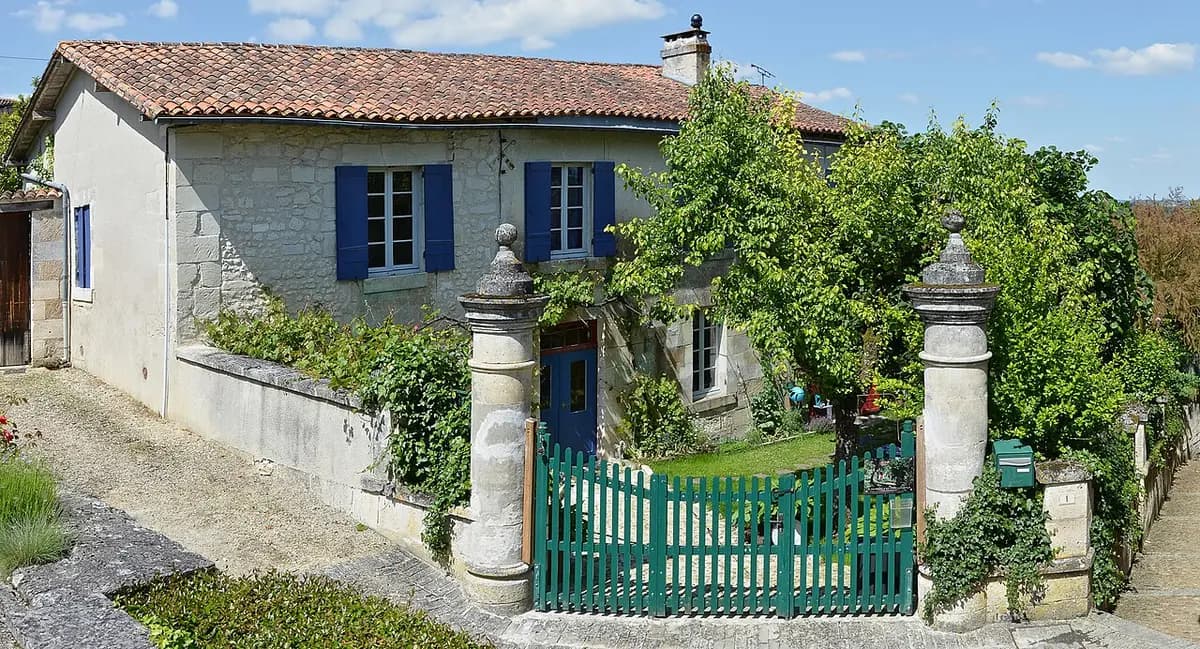
Photo: JLPC, Wikimedia Commons, CC BY-SA 3.0 licence.
Revenue of €5,000 or less
Since 1 January 2019, an automatic exemption applies, according to impots.gouv.fr, to taxpayers on the "minimum base" whose turnover or revenue for the reference period (generally the year before last) is less than or equal to €5,000. The page on Entreprendre.service-public.gouv.fr (checked on 2 April 2026) specifies that a business is exempt if its turnover excluding VAT for the year before last (N-2) did not exceed €5,000.
Note: this threshold applies to the minimum contribution, not to every situation. The initial declaration still has to be filed in the first year, according to impots.gouv.fr, whatever your tax regime.
France ruralités revitalisation (FRR) zones
In FRR zones, in force since 1 July 2024, municipalities and EPCIs can, according to ministerial answer no. 916 (article 1466 G of the French tax code), exempt from CFE the activities that start up in their area, including furnished tourist rentals. Again, everything depends on a local resolution: ask your town hall.
Which situation, which CFE? Summary table
This table is a summary reading of the texts cited above, to be confirmed with your SIE.
How much does CFE cost on a furnished rental?
There is no national amount: CFE is calculated on the rental value of your premises, with a locally set rate. For a non-exempt furnished-rental host, the ministry states that taxation is most often limited to a minimum contribution, "proportionate to taxpayers' ability to pay" (article 1647 D of the French tax code; own translation).
The minimum base depends on your turnover for the year before last and on your municipality. Here are the 2026 ranges published by Entreprendre.service-public.gouv.fr:
| Turnover excl. VAT in N-2 | 2026 minimum base (depending on the municipality) |
|---|---|
| €10,000 or less | €250 to €597 |
| €10,001 to €32,600 | €250 to €1,194 |
| €32,601 to €100,000 | €250 to €2,509 |
| €100,001 to €250,000 | €250 to €4,183 |
| €250,001 to €500,000 | €250 to €5,974 |
| €500,001 and over | €250 to €7,769 |
Source: Entreprendre.service-public.gouv.fr, page "Cotisation foncière des entreprises (CFE)", checked on 2 April 2026. These amounts are bases: the amount payable then depends on your authority's rate. This minimum base applies when the actual rental value is below this minimum.
Your CFE notice remains the only reference for the exact amount due in your municipality. Do not confuse it with your income tax: furnished-rental income falls under the micro-BIC or the actual regime, described in our guide to short-term rental taxation, and the choice between LMNP and LMP concerns income tax, not CFE.
Which formalities and dates should you remember?
The initial declaration 1447-C-SD
According to impots.gouv.fr, in the first year of letting you must file declaration no. 1447-C-SD with the SIE for the location of the property, by 31 December at the latest. This applies whatever your income tax regime. The Entreprendre.service-public.gouv.fr page gives the same rule for a new business: declaration before 31 December of the year of creation, with an exemption for the year of creation that depends on this filing.
Even if you think you are exempt, file it: it is what lets the tax authority record your situation and, where relevant, apply the exemption.
The amending declaration 1447-M-SD
It is needed only if the surface area changes, if you request an exemption or if an item of the previous declaration changes. It must be filed by the second working day after 1 May at the latest: the Entreprendre.service-public.gouv.fr page gives 5 May 2026 for CFE 2027.
Payment
The dates appear on the same page:
- CFE of €3,000 or less: payment by 15 December at the latest;
- CFE of more than €3,000: an instalment of 50% of the previous year's CFE, generally between 26 May and 16 June, then the balance by 15 December at the latest.
Attention
For a new activity, the Entreprendre.service-public.gouv.fr page states that the exemption for the year of creation depends on filing the initial declaration 1447-C-SD. Put the 31 December deadline in your calendar in the first month of letting.
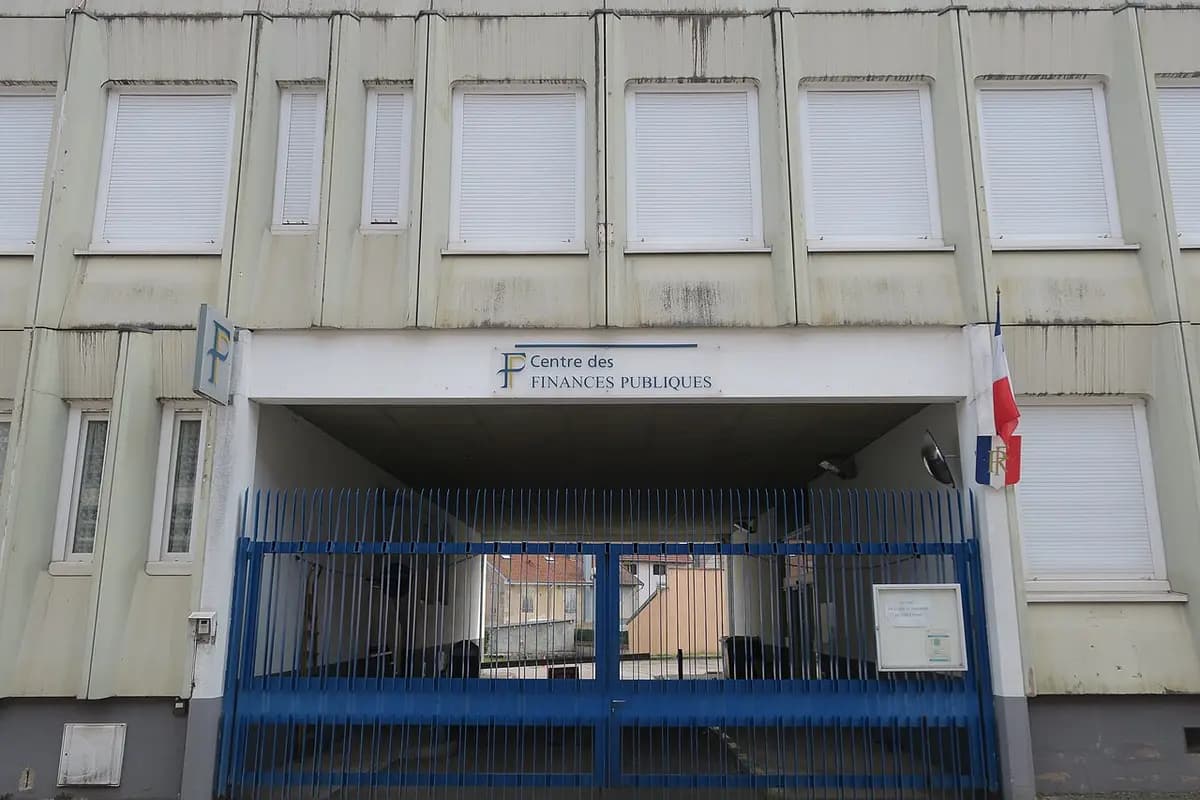
Photo: Mathieu Kappler, Wikimedia Commons, CC BY-SA 4.0 licence.
CFE and housing tax: a double taxation?
Ministerial answer no. 916 addresses a frequently misunderstood point. According to the government, the housing tax on second homes is due on all furnished premises used as a home other than a main home, including when they are subject to CFE. It relies on a decision of the Conseil d'État of 15 June 2023 (no. 468195): when premises are let for short periods that the owner is free to accept or refuse, the owner is regarded as intending to keep their use on 1 January.
Consequence stated by the ministry: a let furnished property that is not the taxpayer's main home is liable to both CFE and the second-home housing tax. This double taxation can be removed or reduced in some cases, for example through the CFE exemption in 3° of article 1459 or, in an FRR zone, through a housing tax exemption that the municipality can vote for classified furnished tourist rentals and bed and breakfasts (chambres d'hôtes).
If you let a second home on Airbnb or Booking, check both lines on your tax notices. To compare host statuses, also read our article chambre d'hôtes or meublé de tourisme and our guide to classification of furnished tourist rentals, since classification affects local taxation as well as income tax.
Mistakes to avoid
- Forgetting the initial declaration because you are "on micro-BIC": your income tax regime has no effect on the obligation to file it.
- Assuming the municipality has decided nothing: the 3° exemption depends on a resolution that may or may not exist. Check with your town hall or your SIE.
- Confusing personal home with a property dedicated to letting: only the former is covered by the optional exemption, according to the BOFiP.
- Mistaking the €5,000 threshold for a complete exemption from formalities: it applies to the minimum contribution and assumes you are properly registered.
- Ignoring CFE when you move from occasional to regular letting: a letting renewed every year is no longer "accidental".
- Missing the 15 December deadline, which remains the deadline for paying the balance.
Key takeaways
Information
- Furnished letting is deemed professional: it is in principle subject to CFE, whatever the income tax regime.
- Exemptions depend on your situation: occasional letting, a room in the main home, a furnished property within your personal home (unless the municipality decides otherwise), revenue of €5,000 or less.
- The initial declaration 1447-C-SD must be filed before 31 December of the first year, even if you hope for an exemption.
- Payment is due by 15 December at the latest, with a 50% instalment in June if CFE exceeds €3,000.
- A furnished property that is not your main home can be taxed under both CFE and second-home housing tax.
FAQ
Does a micro-BIC host have to pay CFE?
Yes, in principle. The micro-BIC regime concerns income tax, whereas CFE is a local tax linked to the business activity. You may nevertheless be exempt depending on your situation, for example if your revenue for the year before last did not exceed €5,000 or if your municipality has not removed the exemption applying to the personal home.
Do I have to declare CFE if I am exempt?
Yes, in the first year. Impots.gouv.fr requires declaration 1447-C-SD to be filed by 31 December of the first year of letting at the latest, whatever the tax regime. This lets the tax authority record your activity and apply the exemption that concerns you.
Is my classified furnished tourist rental exempt from CFE?
Not automatically. The exemption for classified furnished tourist rentals assumes that the property forms part of your personal home and that your municipality or inter-municipal body has not decided to remove it. Check the local resolution with your town hall or the SIE.
When is CFE paid?
CFE of €3,000 or less is paid by 15 December at the latest. Above €3,000, a 50% instalment is generally requested between 26 May and 16 June, then the balance by 15 December at the latest, according to the Entreprendre.service-public.gouv.fr page checked on 2 April 2026.
Does CFE replace the tourist tax or the property tax?
No. The tourist tax is collected from guests and passed on to the municipality, property tax is owed by the owner of the building, and CFE is owed in respect of the letting business activity. They can therefore add up.
Where can I find my municipality's rules?
From your town hall and from the SIE for the location of the property. Local resolutions on optional exemptions, for example those provided for in article 1639 A bis, decide the fate of the exemption applying to the personal home.
Keeping your host formalities under control
CFE is just one more line in a host's budget, but it illustrates a simple rule: a furnished rental is a business activity in its own right, with its own deadlines. Note your declaration dates, keep your revenue records and check your municipality's decisions.
On the guest side, you can at least save time during stays: with the Majordia digital welcome book, each property has a guidebook accessible by QR code, with sections for Wi-Fi, door code, contacts and emergency numbers, automatically translated into six languages. Plans are detailed on the Pricing page. Majordia does not replace your tax return: for the exact calculation of your CFE, contact your SIE or your accountant.
Image credits. Cover: photo "A person holding a house key in front of a calculator" by Jakub Żerdzicki, Unsplash, Unsplash licence. Illustrations: JLPC (CC BY-SA 3.0) and Mathieu Kappler (CC BY-SA 4.0), via Wikimedia Commons; images converted to WebP and resized.
All articles
Share:
Free trial
Ready to switch to a digital booklet?
1 month free: card offered at signup (optional). With a card, your complimentary QR code ships free to you during the trial. Your booklet is ready in minutes.
Create my booklet for free


