| Condition | Threshold required, for each disability family targeted |
|---|---|
| Mandatory criteria of the standard | All of them |
| Comfort-of-use criteria | At least 75% |
| Number of disability families (hearing, mental, motor, visual) | At least 2 out of 4 |
Compliance
Tourisme & HandicapAccessibilityFurnished tourist rentalLabelRegulation
Tourisme & Handicap label for a furnished rental
How to obtain the Tourisme & Handicap label for a furnished tourist rental: conditions, evaluation, non-ERP criteria, 5-year validity and points in the star rating.
Équipe Majordia

Obtaining the Tourisme & Handicap label for a furnished tourist rental (meublé de tourisme) is a voluntary process, assessed on site by a pair of evaluators, and it requires meeting precise criteria for at least two of the four disability families. Few hosts know the details, even though the star-rating standard awards points for it.
This guide draws on the texts and documents published by Atout France and on the order of 18 April 2024 to answer four questions: what is the label for, which conditions must be met, how does the evaluation work, and which concrete criteria do evaluators check in accommodation that is not an establishment open to the public (ERP, établissement recevant du public). It complements our practical guide on accessibility in tourist accommodation, which explains how to make a property and a listing more accessible without over-promising.
Last verification of official sources: 8 October 2026. Quotations from French official sources are our own translations. This article is informational and is not personalised legal advice: check with your local label relay according to your situation.
What is the Tourisme & Handicap label?
The Tourisme & Handicap label is a state label. According to Atout France's presentation page, it was created in 2003 and has been managed by Atout France since May 2024. It aims to encourage professionals to adapt their offer, to support them in making it accessible and to give visitors with disabilities a clear reference point. The same page mentions nearly 12 million French people concerned.
The current legal framework is the order of 18 April 2024 on the conditions for awarding and withdrawing the "Tourisme & Handicap" label, published in the Journal officiel of 20 April 2024 and in force since 1 May 2024.
The label covers accommodation, restaurants, visitor attractions, leisure and tourist information. According to Atout France's labelling procedure, a labelled establishment meets criteria relating to the accessibility of facilities and services, to reception and information for customers, and to safety. The label is valid for 5 years.
For a host, this label is therefore very different from the star rating: it does not grade the overall comfort of the property, it certifies its level of accessibility for specific disability families. To understand the other process, read our article on the classification of furnished tourist rentals.
Which conditions must you meet to be labelled?
According to Atout France's procedure and annex 1 of the order, the applicant must meet the following cumulative criteria for at least two of the four disability families (hearing, mental, motor, visual):
- comply with the regulatory requirements of its activity;
- for each disability family concerned: meet all the mandatory criteria of the standard and score at least 75% on the comfort-of-use criteria.
The first condition is justified by a sworn statement from the applicant. The second results from the evaluation. In other words, there is no overall score: you qualify disability family by disability family.
Source: Atout France labelling procedure and annex 1 of the order of 18 April 2024; at least two families out of four are required.
Atout France's clarification note of January 2026 explains the logic: the mandatory criteria refer to accessibility regulations, while the comfort-of-use criteria go further to improve the stay. The standards distinguish accommodation that is an ERP from accommodation that is not an ERP; to find out which category your rental falls into, ask the local label relay.
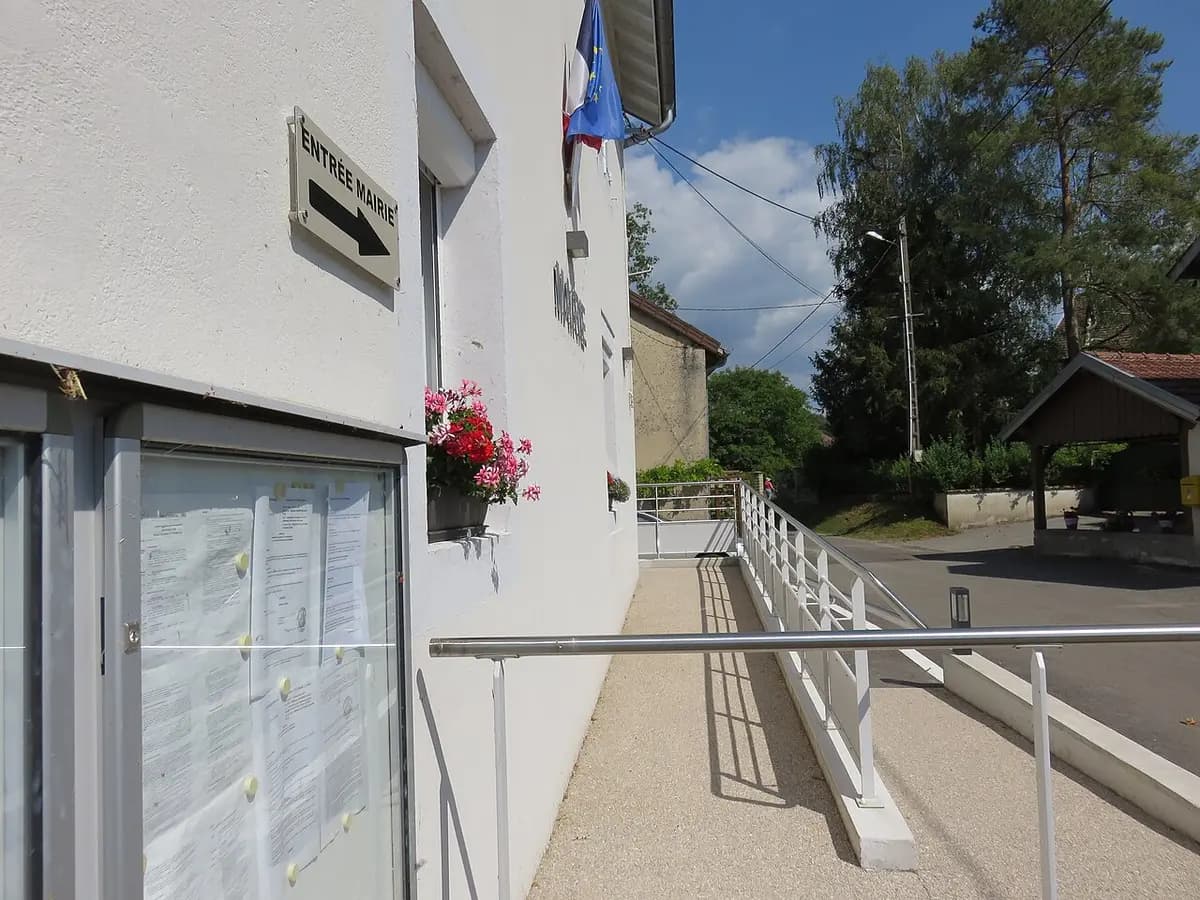
Photo: Sebleouf, Wikimedia Commons, CC BY-SA 4.0 licence.
How does the evaluation work, step by step?
Atout France describes the process in its labelling procedure:
- Self-assessment (optional). An online tool lets you estimate whether you can obtain the label, on your own.
- Checking the conditions: compliance with the regulations of your activity and criteria for at least two disability families.
- Filing the application on the label management platform, a compulsory step.
- On-site evaluation. It is compulsory for the first labelling as for every renewal. Accompanied by a local label relay, you are evaluated by a pair made up of a representative of the tourism sector and a representative of associations of people with disabilities, all disabilities combined.
- Approved evaluator if you are not accompanied. Without a local relay in your area, or if you apply at the same time for "Destination d'excellence" and "Tourisme & Handicap", you choose an evaluation body approved by Atout France.
- Decision by Atout France after the evaluation.
As for cost, the official pages consulted for this article state neither a fee nor that the evaluation is free: ask the local relay in your area before starting.
Duration, renewal and withdrawal
According to article 7 of the order, the label may be used for five years from notification. Atout France states that the labelling expires on its fifth anniversary unless a new evaluation, which may not take more than six months to carry out, is started before that date and filed on the platform before the six-month period expires. Validity is then extended for the time strictly necessary.
Article 7 also provides for possible withdrawal: Atout France may end the labelling if the criteria or the procedure are not respected, or if the rules of use of the mark are breached, after a period of ninety days to remedy the failings. The decision must be reasoned and notified.
Which criteria do evaluators check in non-ERP accommodation?
Atout France's clarification note of January 2026 contains a section dedicated to non-ERP accommodation. It explains how evaluators interpret certain criteria. Here are the most useful examples for a furnished rental, all taken from that document:
| Area of the property | What the note specifies |
|---|---|
| Bed | A passage of at least 0.90 m on both long sides and 1.20 m at the foot, or 1.20 m on both long sides and 0.90 m at the foot |
| Window | A free usage space of 0.80 m by 1.30 m in front of at least one window; opening controls at 1.30 m at most; an L- or S-shaped handle can lower the grip without changing the window |
| Shower | A firmly fixed, stable seat; a mobile seat can compensate if it is solid, with stable legs, and if the armrests can be removed |
| WC | Grab bar between 0.70 m and 0.80 m high, at most 0.45 m from the centre of the bowl; suction-cup bars are not allowed |
| Kitchen | A free passage at least 0.70 m high under or near the sink and hob; a 100% touch hob alone: criterion invalidated, an electric hotplate with at least one heating point allows it to be validated |
| Safety | Display of emergency numbers (112, 18, 15) and of 114 for hearing disability; perceptible fire alarm (flashing light) where a person is alone, such as bathrooms |
| Access route | Graspable guardrail or handrail for any change of level of more than 0.40 m; continuous, rigid, easily graspable handrail |
Source: Atout France, Tourisme & Handicap clarification note, version 1 of January 2026, section "Hébergement non ERP". This table is an extract: the full standard prevails.
Several of these criteria also apply to each additional room or unit: if you offer two units under the same roof, the checks are repeated.
Another useful point: for non-ERP accommodation, the criterion on the website's compliance with the RGAA principles (the French general framework for improving accessibility) is a "bonus" criterion according to the note, so the professional is not penalised if it is not met. To meet it, you must have an accessibility statement displayed on your website.
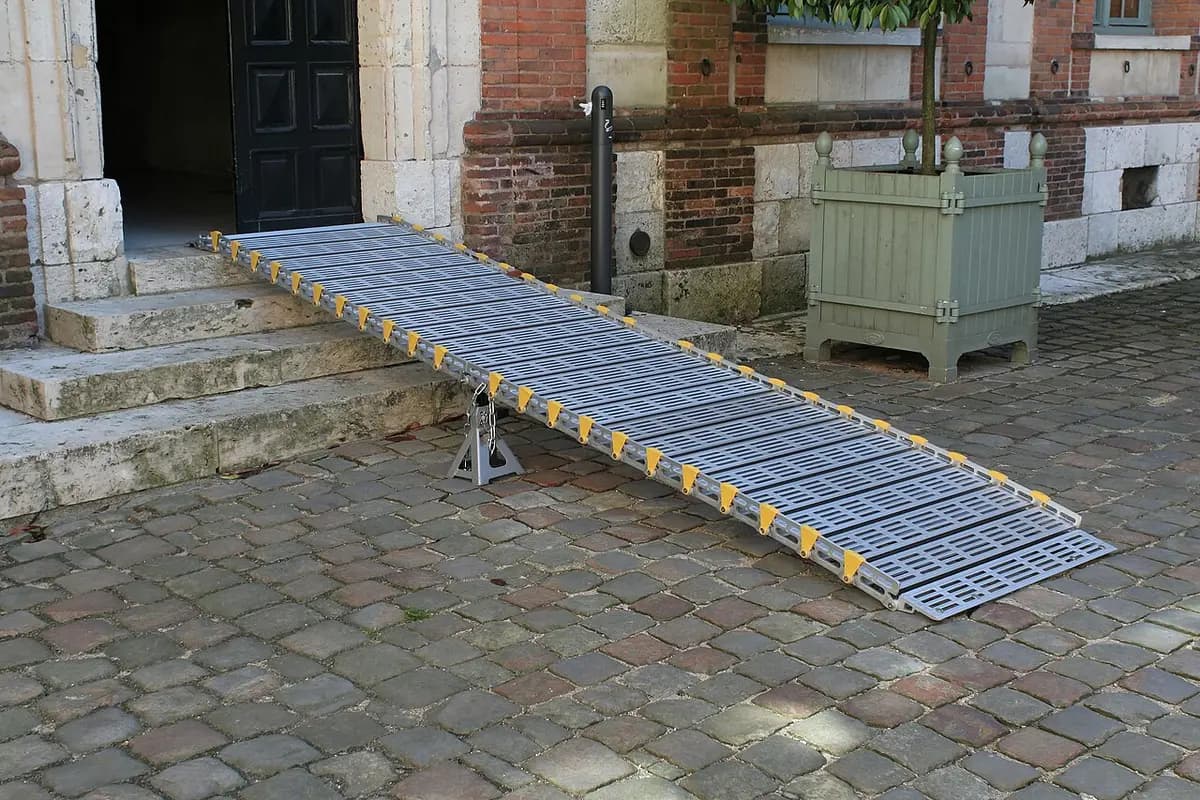
Photo: Coyau, Wikimedia Commons, CC BY-SA 3.0 licence.
Does the label earn points in the star rating?
Yes, it is one of the concrete benefits for a furnished rental. In Atout France's classification standard for furnished tourist rentals, criterion 122, "Obtaining the Tourisme et Handicap label", is worth 3 points and is among the optional "à la carte" criteria. Criterion 121, "Accessible document made available", is validated if the rental holds the Tourisme et Handicap label.
Two accessibility criteria in the same chapter remain mandatory in every category: accessibility information in the information materials (criterion 116) and, if you do not hold the label, the accessible document made available (criterion 121). A host preparing a classification can therefore work on accessibility information without waiting for labelling. The points calculation rules are detailed in our article on the classification of furnished tourist rentals.
What financial aid exists, and what are the rules on using the logo?
The clarification note gives two practical points.
- Financial aid. For local, departmental or regional aid, contact the relevant bodies in your area directly; in a Leader area or an area eligible for European funds in rural areas, funding may exist depending on the local strategy, through the local action group. At national level, the Fonds territorial d'accessibilité ended on 8 January 2026: businesses that had not started their application before that date can no longer benefit from it for their works.
- Logo. The Tourisme & Handicap logo is not free to use: it is reserved for labelled professionals, local relays and evaluation bodies approved by Atout France. An accommodation that is "identified as accessible" but not labelled may use royalty-free pictograms developed by the State.
How can you prepare your application without over-promising?
A few simple habits before contacting the local relay:
- Measure your property against the dimensions in the clarification note: passages around the bed, handle heights, grab bar, space under the sink.
- List the disability families that are most realistic for your property: you need at least two out of four, with all the mandatory criteria for each.
- Do the online self-assessment to spot gaps before the visit.
- Do not describe yourself as "labelled" before Atout France's decision, and do not use the logo without authorisation.
- Be factual in your listing: state what is true (door widths, a shower seat, steps at the entrance) rather than a general term such as "wheelchair accessible".
On the guest information side, a well-built welcome book also helps: with the Majordia digital welcome book, each property has a guidebook accessible by QR code, with sections for Wi-Fi, door code, contacts and emergency numbers, automatically translated into six languages. It does not replace the display of safety instructions in the property required by the standard, but it lets you describe access, the route and equipment clearly before arrival. For safety, also see our guide on smoke detectors in holiday rentals.
Key takeaways
Information
- The Tourisme & Handicap label is a state label created in 2003, managed by Atout France since May 2024 (order of 18 April 2024, in force since 1 May 2024).
- You must meet all the mandatory criteria and score at least 75% on comfort-of-use criteria, for at least two of the four families of disability.
- The on-site evaluation is compulsory, at first application and at renewal; the label is valid for 5 years.
- In the star rating of furnished rentals, obtaining the label is worth 3 points à la carte.
- The logo is reserved for labelled establishments; the Fonds territorial d'accessibilité ended on 8 January 2026.
FAQ
Is the Tourisme & Handicap label compulsory for a furnished tourist rental?
No. According to Atout France, the process is voluntary. It does not replace the accessibility and safety obligations that apply to your accommodation, nor the registration with the town hall.
Do you have to be accessible to all four disability families?
No. You must meet the criteria for at least two of the four families: hearing, mental, motor and visual. For each family targeted, all the mandatory criteria and at least 75% of the comfort-of-use criteria must be met.
How long is the label valid?
Five years from notification, according to the order of 18 April 2024. A new evaluation started before the fifth anniversary extends validity for the time needed to carry it out and for Atout France's decision.
Does an induction hob prevent labelling?
Not necessarily, but it can invalidate a criterion. The clarification note states that if only a 100% touch hob is present, the criterion on locating the hob controls is invalidated; adding an electric hotplate with at least one heating point allows it to be validated.
Does the label earn points in the star rating?
Yes. Criterion 122 of the classification standard for furnished tourist rentals, "Obtaining the Tourisme et Handicap label", is worth 3 points and is an optional criterion. It also validates criterion 121 on the accessible document.
Who evaluates my rental?
A pair of evaluators made up of a tourism representative and a representative of associations of people with disabilities, if you are accompanied by a local relay. Without a local relay, you choose an evaluation body approved by Atout France.
From intention to application
The Tourisme & Handicap label calls for rigour more than budget: dimensions to respect, criteria to check family by family and an on-site evaluation. Start with the self-assessment, contact the local relay in your area and keep your communication honest about what your property really allows.
To centralise the information for your guests, you can create one welcome book per property with Majordia and compare plans on the Pricing page. Majordia neither awards nor evaluates the label: the decision rests with Atout France.
Image credits. Cover: photo "A large bathroom with a walk in shower next to a toilet" by Alex Tyson, Unsplash, Unsplash licence. Illustrations: Sebleouf (CC BY-SA 4.0) and Coyau (CC BY-SA 3.0), via Wikimedia Commons; images converted to WebP and resized.
All articles
Share:
Free trial
Ready to switch to a digital booklet?
1 month free: card offered at signup (optional). With a card, your complimentary QR code ships free to you during the trial. Your booklet is ready in minutes.
Create my booklet for free


.jpg)
