| Expense item | Observed annual amount | Notes and explanation |
|---|---|---|
| Platform commission (shared fees ~3%) | €655 | Collected at source by Airbnb on each host payout. |
| Cleaning and laundry service | €3,120 | 52 turnovers per year at €60 per stay (covered by guest fees). |
| Electricity, gas, water | €1,650 | Actual bills (heating in winter, hot water, air conditioning). |
| Dedicated fiber internet subscription | €420 | Router with guaranteed speed and responsive customer support (€35/month). |
| Non-Occupying Owner Insurance (PNO LCD) | €380 | Specific policy including vacation use and tenant recourse. |
| Property tax and business property tax (CFE) | €1,150 | Business property tax required for any furnished rental operator. |
| Welcome consumables | €450 | Coffee, tea, sugar, oil, salt, quality toilet paper, soap. |
| Maintenance and breakage replacement | €750 | Replacing broken glasses, paint touch-ups, batteries, light bulbs. |
| Software tools (welcome book, pricing) | €320 | Tools to automate instructions and adjust rates. |
| Total operating expenses | €8,895 | Direct annual expenses. |
| Net result before tax and depreciation | €12,945 | About 59.3% operating net margin. |
Guide
AirbnbBeginnerRegulationsProfitabilityAutomationLMNP
How to Start on Airbnb in 2026: The Ultimate New Host Guide
Legal framework, the Le Meur law, LMNP vs micro-BIC taxation, high-ROI setup, the algorithm, and automation: a fully sourced, end-to-end guide to launching your short-term rental in 2026.
Majordia Team

Starting on Airbnb in 2026 looks nothing like the informal adventure of the 2010s. The era when all you needed was a spare sofa, three dark phone photos, and a listing description to fill your calendar is over.
The short-term rental market has become more structured. In France, the platform’s largest European market with more than 800,000 listings recorded, the competition now follows the methods of independent hospitality: top-tier bedding, contactless locks, fast responses within the hour, and polished listings. At the same time, the state and local authorities have put in place a strict framework governed by Law No. 2024-1038 of November 19, 2024 (the so-called “Le Meur law”) and EU Regulation 2024/1028 on the automated transmission of stay data.
That said, the model remains highly attractive when managed with discipline. Sector data from Insee and tourism observatories confirm that a well-located furnished property generates on average 1.8 to 2.5 times more gross revenue than a traditional year-round unfurnished rental, while greatly reducing the risk of prolonged non-payment thanks to upfront payment on the platform.
This reference guide breaks down every step without unnecessary jargon, without unrealistic promises, and with the exact legal references you need to launch your business, secure your administrative steps, welcome your first guests, and automate your day-to-day operations.
Essential glossary: understanding the terms without jargon
To avoid any confusion, here is the practical meaning of a few technical terms used by professionals:
- Tourist furnished rental: the legal category for a villa, apartment, or studio furnished for the exclusive use of the tenant, rented to passing guests for short stays (by the night, week, or month), without making it their primary residence (article L. 324-1-1 of the Tourism Code).
- Primary residence: a home occupied for at least 8 months per year by the owner or main tenant.
- Secondary residence: any home occupied for less than 4 months per year (vacation home, dedicated rental investment).
- Average nightly rate (ADR): total accommodation revenue divided by the actual number of nights booked over a given period.
- Occupancy rate: the percentage of nights booked compared with the total number of nights the property was open for booking.
- Revenue per available day (RevPAR): total revenue divided by the total number of days the property could be booked. This is the most reliable metric for comparing two properties.
- Booking platforms (OTAs): sites such as Airbnb, Booking.com, or Vrbo that connect hosts and travelers in exchange for a commission.
- Turnover: all tasks carried out between one guest’s departure (at 10 a.m. or 11 a.m.) and the next guest’s arrival (at 3 p.m. or 4 p.m.): full cleaning, disinfection, linen replacement, and equipment checks.
1. The legal and regulatory framework in France in 2026
Before buying a single piece of furniture or creating your online listing, you must first confirm your legal obligations. The financial penalties are not theoretical: in the event of an infringement, civil courts can impose fines of up to €50,000 per property for unlawful change of use and up to €15,000 for failure to register.
A. The prior declaration and Déclaloc registration number
Since Law No. 2024-1038 came into force, the process has been standardized across the country:
- Universal registration requirement: whether your property is in the heart of a major city (Paris, Lyon, Marseille, Nice, Bordeaux) or in a rural town of 500 residents, any tourist furnished rental requires a prior declaration.
- The 13-character number: the process is completed at the town hall or via the local online service (often linked to the national Déclaloc system). You receive a receipt containing an official 13-digit registration number. This number must be entered in your Airbnb account settings for your listing to be legally published.
- Tax data transmission (EU Regulation 2024/1028): platforms now directly transmit each month to the tax authorities and town halls the detailed list of stays, the exact address of the property, and the gross amounts received. Any false declaration is automatically detected when records are cross-checked.
For the full declaration process, see the official Service-Public.fr page on declaring tourist furnished rentals as well as our guide on the Le Meur law and Déclaloc.
B. Primary residence vs. secondary residence: length limits
- If you rent out your primary residence: you do not need change-of-use authorization. However, the law now allows municipal councils to reduce the maximum tourist rental limit from 120 days to 90 days per calendar year. Check the rule currently in force in your municipality before planning your annual calendar (see our full analysis of the 90-day cap for primary residences).
- If you rent out a secondary residence or a dedicated investment property: in cities with more than 200,000 residents, in tight housing markets, or in municipalities that have adopted a specific resolution, you must obtain prior change-of-use authorization, and in many cities this comes with a compensation requirement (buying a commercial-use right of equivalent value when converting commercial premises into housing).
C. The Energy Performance Certificate (DPE)
Energy regulations now apply clearly to tourist rentals:
- Properties rated G under the DPE can no longer be newly offered as furnished tourist rentals.
- To open a tourist furnished rental in 2026, the property must have at least a class E rating (the minimum required level will move to class D by 2034).
- Owners must attach or keep available the valid certificate issued by a certified assessor when declaring the property at the town hall. See our practical guide on DPE and renovation for tourist rentals.
D. Condominiums: check the building rules
Article 26 of the July 10, 1965 law governing condominiums has been strengthened. Do not sign any purchase agreement without carefully reviewing the condominium bylaws:
- A clause of “exclusive bourgeois residential use” outright prohibits any tourist furnished rental, which appeal courts have treated as a commercial hospitality service.
- If the bylaws state “simple bourgeois residential use”, liberal professions are allowed, but repeated tourist rentals are very often deemed unlawful when they cause repeated disturbances in common areas.
- General meetings can now vote to ban short-term rentals by a two-thirds majority of condominium owners’ votes (see our legal breakdown on condominiums and the two-thirds rule).
2. Market research and calculating true profitability
To succeed, never rely on Airbnb prices shown for a festive weekend: those amounts reflect listings that were left unsold. Base your business model on consolidated market data.
Analyze the local market with reliable sources
Use recognized data sources:
- Local publications from regional and departmental tourism boards.
- Reports from specialized observatories such as AirDNA or PriceLabs, which aggregate actual completed bookings (effective price paid, average length of stay, monthly occupancy rate).
Example of net operating income calculation for a one-bedroom apartment (40 m²):
Assumption: city center of a mid-sized urban area (e.g. Angers, Rennes, Dijon).
- Number of open days per year: 320 days
- Observed occupancy rate: 65% (i.e. 208 nights booked per year)
- Average nightly rate (ADR): €105
-------------------------------------------------------------------------
Annual gross accommodation revenue: 208 nights × €105 = €21,840
Detailed projected operating statement
Here is a line-by-line breakdown of real annual operating expenses:
To manage your calendar and optimize your rates based on demand without underselling your property, see our guide on dynamic pricing for a small portfolio.
3. Administrative steps and taxation: Micro-BIC or Real Tax Regime?
Any furnished rental operator is treated by the tax authorities as a commercial business under Industrial and Commercial Profits (BIC). You must complete two mandatory steps with the state:
- Obtaining a SIRET number: within 15 days of your first rental, you must register your activity on the official INPI portal: formalites.entreprises.gouv.fr. Registration is free and gives you a SIRET number required for your tax filings.
- Choosing your tax regime: the decision between the flat-rate Micro-BIC regime and the real tax regime (LMNP under the real regime) directly determines how much net income tax will remain in your bank account.
Micro-BIC in 2026: the new rules
Article 50-0 of the French General Tax Code has been significantly revised:
- For an unclassified tourist furnished rental: the flat-rate expense allowance is now 30% up to €15,000 in annual revenue. You are taxed on 70% of your gross income, at your marginal income tax rate (0%, 11%, 30%, 41%, or 45%) plus 17.2% social contributions.
- For a tourist furnished rental classified with stars (Atout France): the flat-rate allowance is 50% up to €77,700 in annual revenue.
Astuce
Getting the official star rating from a Cofrac-accredited organization (procedure available on atout-france.fr) costs between €180 and €300 for a 5-year period. If you choose to stay under Micro-BIC, this classification can save you several hundred euros in taxes from the first year thanks to the allowance increasing from 30% to 50%.
The Real Regime (LMNP under the real regime): why it remains the most advantageous
For the vast majority of owners using bank financing or who have carried out setup work, the real regime is clearly more advantageous than Micro-BIC.
Its operation rests on two legal accounting pillars:
- Deducting all actual expenses down to the cent: interest on your mortgage, property tax, PNO insurance, cleaning costs, electricity and water bills, accountant fees, and purchases of small furniture and supplies under €500 each.
- Straight-line accounting depreciation: each year you deduct a fraction of the value of the property’s walls (generally depreciated over 25 to 30 years, excluding land value), renovation work (over 10 to 15 years), and furniture (over 5 to 7 years).
Comparative practical case for €22,000 in annual revenue (owner taxed at a 30% marginal rate):
- Under unclassified Micro-BIC: 30% allowance. Taxable income = €15,400. Income tax (30%) + social contributions (17.2%) = 47.2% on €15,400 = €7,268 in tax to pay each year.
- Under the LMNP Real Regime: actual deductible expenses (€8,895) + annual accounting depreciation of the walls and furniture (€6,500) = €15,395 deducted. The taxable result falls below the thresholds or to €0 thanks to depreciation carryforward. Tax to pay = €0.
To explore the details of tax forms No. 2031 and No. 2033, read our full dossier on short-term rental taxation in 2026 as well as our guide to the LMNP vs LMP status.
4. Equipment and interior setup: the standard expected in 2026
A traveler in 2026 expects a smooth experience with no unpleasant surprises. Any equipment or hygiene issue immediately turns into a damaging review score.
A. Bedding: the number one satisfaction criterion
More than 75% of negative comments about physical comfort during a stay concern sleep quality.
- Minimum width: install a 160 × 200 cm (Queen Size) bed rather than a standard 140 × 190 cm bed. Most international guests consider 140 cm too narrow for two adults.
- Mattress: choose a minimum thickness of 24 to 26 cm, with hybrid technology (pocket springs for independent support and high-density 50 kg/m³ comfort foam).
- Hygiene and safety: equip the mattress and pillows with waterproof, breathable protectors that can be washed at 60°C.
- Linens: choose plain white bedding in cotton percale or cotton sateen (minimum 200 thread count). White immediately reassures guests about cleanliness and withstands intensive laundry washing without fading. Provide three complete linen sets per bed (one in place in the property, one clean and ready for the next turnover, one being washed).
B. Room-by-room equipment checklist
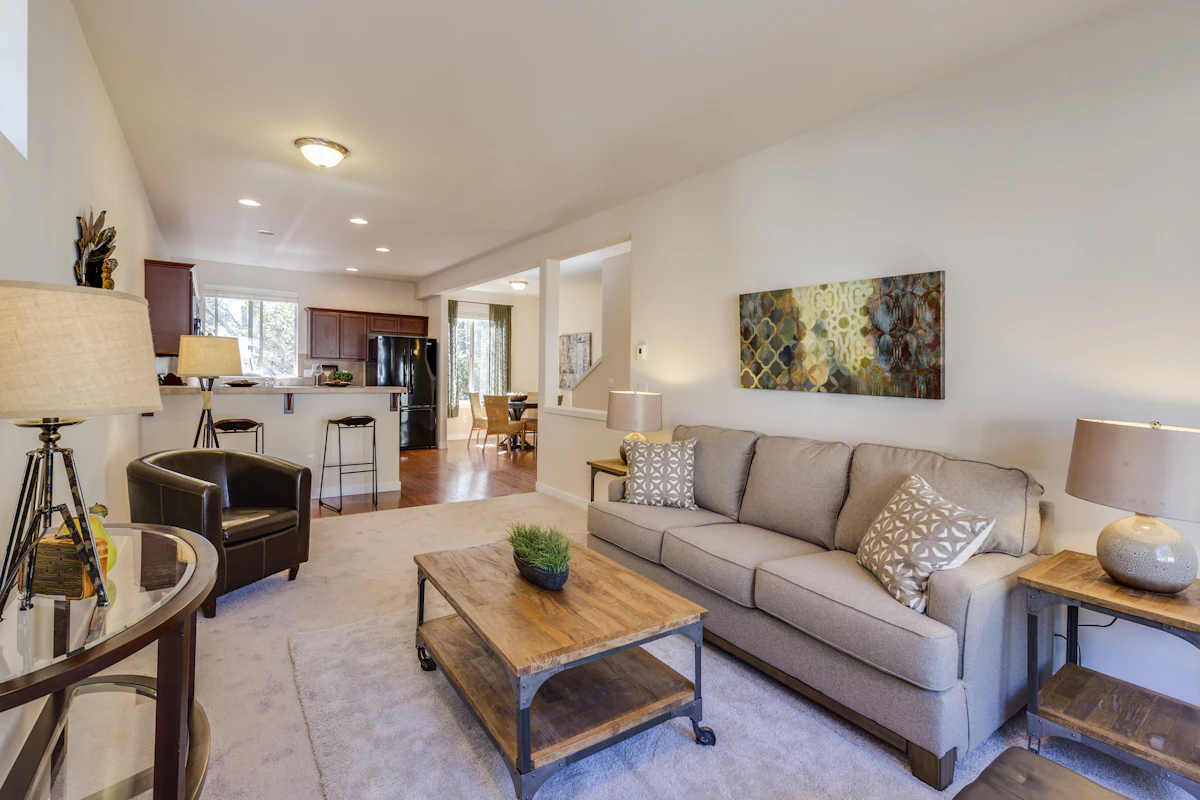
Here are the essential items every guest expects to find upon arrival:
In the kitchen:
- A coffee machine in perfect working order (Nespresso, Senseo, or bean-to-cup) with at least 4 to 6 complimentary pods for the first morning.
- A clean kettle, regularly descaled with white vinegar.
- A microwave and clean cooking hobs, along with scratch-free compatible pots and pans.
- A sealed basic food kit: salt, pepper mill, olive oil, vinegar, individual sugar packets.
- Full dishware set: plates, water glasses, wine glasses, and cutlery in a quantity equal to 2 times the maximum guest capacity.
- Basic cleaning kit: new sponge in packaging, dish soap, 2 clean cotton tea towels, trash bags suited to local recycling rules.
In the bathroom:
- A reliable hair dryer of at least 1,600 W.
- Elegant wall-mounted dispensers for shower gel and shampoo (avoid disposable mini bottles, which create plastic waste and look amateurish).
- 2 towels per person (1 large bath sheet at 500 g/m² + 1 hand towel) + 1 thick bath mat washed at every turnover.
- At least 3 rolls of good-quality toilet paper in advance in the vanity cabinet.
Remote work and connectivity:
- Fiber-optic internet with a download speed test above 100 Mbps (add the speed test screenshot directly to your listing photos). For business travelers, see our guide on welcoming work stays and workation guests.
- Dedicated workspace: a stable table, a chair with good lumbar support, and a power strip that is easy to reach without crawling under furniture.
Safety and fire compliance:
- Smoke detector (DAAF) certified to NF EN 14604, securely fixed to the ceiling in the circulation area leading to the bedrooms (never in the kitchen to avoid false alarms).
- Small 1 kg ABC powder extinguisher checked annually and placed under the sink or in the entryway.
- Laminated sheet displaying emergency numbers: 112 (European emergency number), 15 (SAMU), 18 (Fire Brigade), 17 (Police / Gendarmerie).
5. Creating a high-performing Airbnb listing
Your listing is your sales tool. It must capture a traveler’s attention on their screen in under 3 seconds.
A. Professional photography
According to Airbnb’s official recommendations published in its Host Resource Center, listings illustrated with bright, well-composed photos achieve much better click-through and conversion rates. Find all framing tips in our full guide on listing photos that convert.
- Hire a professional interior photographer or use a DSLR / mirrorless camera with a rectilinear wide-angle lens (16–24 mm full-frame equivalent). Avoid “fish-eye” lenses, whose distorted lines disappoint guests on arrival.
- Take photos in clear weather, with curtains and shutters wide open, and all artificial light sources turned on to create a warm feel.
- Prepare the staging before the shoot: bed made perfectly, table set with two coffee cups, towels neatly folded, no trash bins or visible electrical cables.
The strategic order of the first 5 photos (the welcome mosaic):
1. Main photo (Hero): a wide shot of the brightest and most appealing living area.
2. Second photo: the main bedroom highlighting the large bed and fluffy pillows.
3. Third photo: the contemporary kitchen, clean and well equipped.
4. Fourth photo: the bright bathroom with towels arranged neatly.
5. Fifth photo: a polished detail (bright desk corner, espresso machine, window view, or balcony).

B. Title and description: clarity and precision
Airbnb’s search algorithm favors relevance and consistency between the listing promise and the actual guest experience. Avoid flashy titles like “Magnificent dream apartment.”
Prefer a factual, descriptive format:
[Property type] + [Exact location / key advantage] + [Key amenities]
Concrete examples:
- “Renovated Studio 200m from the Station — Fiber Wi-Fi & Self Check-In”
- “Bright One-Bedroom in Historic Center — Private Parking & Queen Bed”
In the description:
- Write short paragraphs of 3 to 4 lines maximum.
- Answer essential logistical questions right away: floor level with or without elevator, parking accessibility, exact bed size, presence of stairs or architectural quirks.
- Clearly but kindly spell out the house rules (see our short-term rental house rules template): strict no-smoking indoors, no parties, and a clear pet policy (see pet management in seasonal rentals).
To go deeper into how the algorithm works, see our guide on the Airbnb algorithm and right fitting.
C. Pricing strategy for the first 3 bookings
At launch, a new listing has no guest reviews or social proof. Airbnb systematically suggests activating a 20% discount on the first 3 bookings.
Enable this option without hesitation:
- Your listing gets temporary algorithmic visibility reserved for new listings.
- This discount offsets the lack of history and encourages early guests to book quickly.
- Your only priority during the first month is not to maximize margin down to the last cent, but to earn 3 glowing, detailed 5-star reviews. Once you have those 3 reviews, raise your rate to your target market price (see our tips for getting regular 5-star reviews).
6. Automating Daily Operations
Managing a furnished tourist rental should not become a second full-time job. If you have to write 15 manual messages a day to share the Wi-Fi password or explain how the oven works, you will burn out quickly.
A. Self check-in with a smart lock
Welcoming guests in person is often stressful: train delays, traffic jams, waiting outside in the rain. More than 70% of travelers now prefer self check-in with no time constraints.
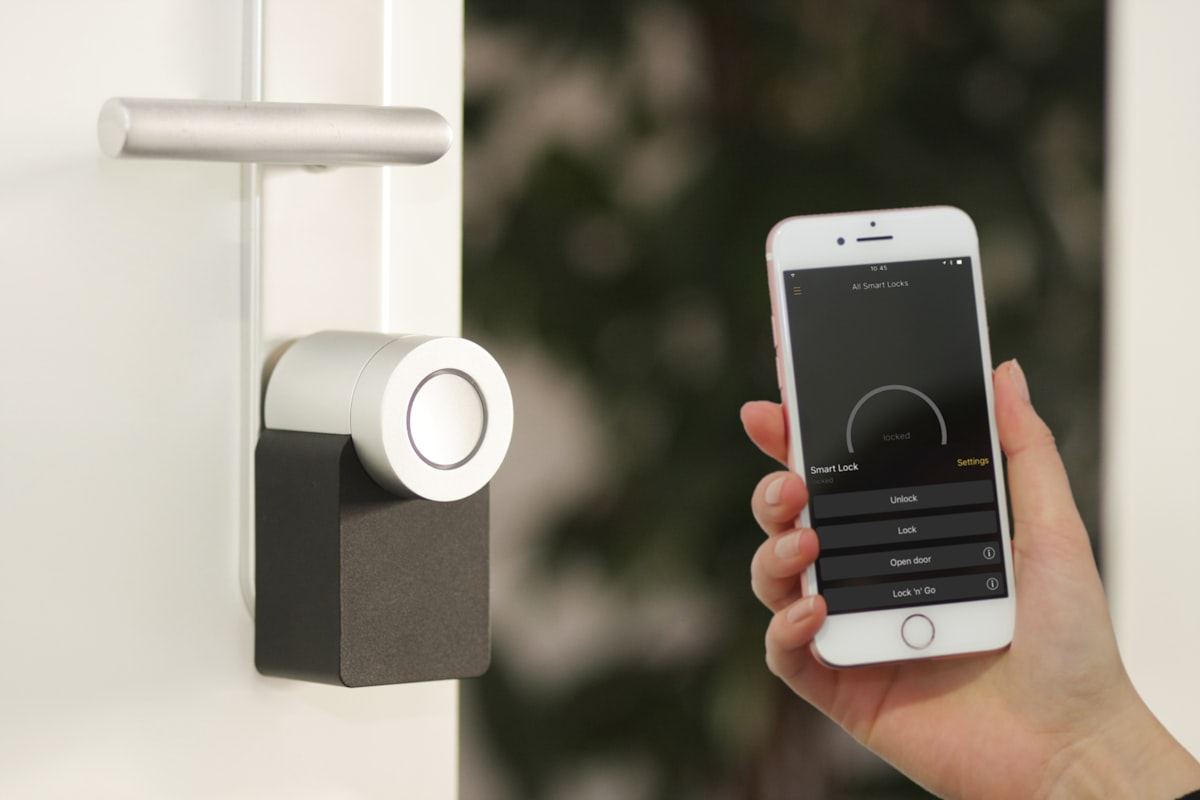
- The equipment: install a smart lock with an outdoor digital keypad mounted on the door frame (for example Nuki Smart Lock with Keypad, Igloohome, or Tedee).
- The protocol: never share the same fixed code with every guest. Set up a personalized temporary PIN code (for example, the last 4 digits of the guest’s mobile number), programmed to activate automatically at check-in time (e.g. 3:00 p.m.) and deactivate at the exact departure time (e.g. 11:00 a.m.).
- Find our detailed comparison in the complete guide to self check-in and smart locks and secure access codes.
B. The digital welcome book: eliminate 70% of recurring questions
In messaging, guests inevitably ask the same practical questions:
- “What is the Wi-Fi box password?”
- “Where are the household waste sorting bins?”
- “How do I start the cooktop or adjust the air conditioning?”
- “Can you recommend a good restaurant or artisan bakery nearby?”
- “What are the instructions for leaving the keys at checkout?”
A paper document left on a piece of furniture gets misplaced, creased, or simply not read (see our comparison of paper welcome book vs digital welcome book). Long blocks of text sent by SMS are unreadable on a smartphone.
The solution used by professionals is to provide an interactive digital welcome book such as Majordia. Accessible with no app to install, simply by scanning a QR code on site or via a link sent before the stay, it lets guests find on their screen:
- A button to connect to Wi-Fi instantly without manually typing a long security key.
- Clear visual guides and 15-second demo videos for household appliances.
- A geolocated interactive map with your favorite local shops and recommended addresses.
- An interactive checkout checklist reminding guests to close the windows and take out the trash.
This smooth handoff removes unnecessary friction, protects your peace of mind, and turns an ordinary stay into an experience perceived as premium (learn why create an Airbnb welcome book).
C. Message templates to automate
Here are the three straightforward, no-frills message templates to schedule in Airbnb’s automated messaging (find all our scenarios in the guide on automating guest messages):
1. Immediate message after booking confirmation
“Hello [First name], thank you for booking at [Property name]! We’re delighted to welcome you from [Arrival date] to [Departure date]. Check-in is self-service from 3:00 p.m. using a secure code. You will receive all the detailed access instructions and the link to our practical welcome book the day before your arrival. Feel free to reach out if you have any questions in the meantime!”
2. Message the day before arrival (at 2:00 p.m.)
“Hello [First name], your accommodation will be ready tomorrow from 3:00 p.m. Here is the practical information for your arrival: Exact address: [Full address]. Front door access code: [PIN code] (active from 3:00 p.m.). You will find all access instructions, the Wi-Fi code, and the best local spots in our online welcome book available here: [Welcome Book Link]. Have a great trip!”
3. Message the day before departure (at 6:00 p.m.)
“Good evening [First name], we hope your stay is going wonderfully. As a reminder, checkout time tomorrow is no later than 11:00 a.m. so our team can prepare the accommodation for the next guests. Before leaving, please simply close the windows, take your trash to the building bins, and shut the door. Safe travels and see you soon!”
7. Risk prevention, damage management, and AirCover
Every new host’s legitimate concern is property damage, disruptive parties, and complaints from neighbors.
A. Sound sensor without voice recording (Minut)
Airbnb policy and French law strictly prohibit any surveillance camera inside the accommodation, regardless of the room.
To protect your property without infringing on tenants’ privacy, install a certified ambient sensor such as Minut:
- The device analyzes decibel levels without capturing or recording any voice or conversation (fully GDPR-compliant).
- If a predefined noise threshold is exceeded (e.g. more than 75 dB for more than 10 consecutive minutes after 10:00 p.m.), you and the guest receive an automated SMS alert inviting them to lower the volume (see our guide on preventing noise and parties in short-term rentals).
- In more than 90% of cases, the guest immediately becomes aware of the disturbance and restores quiet without requiring an in-person visit.
B. Understanding host AirCover coverage and its limits
Airbnb automatically offers all hosts the contractual guarantee AirCover for Hosts, which provides theoretical coverage of up to $3 million in the event of property damage caused by a guest.
However, to obtain compensation, you must follow a very strict documentation process (find the protocols in our guide on disputes and insurance in short-term rentals):
- Prove the damage existed before: you must have time-stamped photos or videos taken just before the stay showing that the property was in perfect condition, as well as detailed photos of the damage as soon as the guest leaves.
- Respect the 14-day deadline: you must report the incident and submit your compensation request in the Airbnb Resolution Center within a maximum of 14 days after checkout, or imperatively before the next guest arrives if that happens sooner.
- PNO insurance remains mandatory: AirCover is not an insurance contract under French insurance law, but a commercial guarantee provided by the platform. You must take out a Non-Occupant Owner insurance policy (PNO) with an approved insurance company (see our analysis of PNO insurance and professional liability for furnished rentals).
8. The algorithm and official Superhost criteria
The Superhost badge provides a tangible competitive advantage: a dedicated filter in search criteria, priority in algorithmic results, and priority access to the platform’s phone support.
According to the official Airbnb Help Center documentation, evaluation criteria are measured automatically every quarter (January 1, April 1, July 1, October 1) over the last 365 days:
Official Superhost status evaluation criteria:
1. Average overall rating:          ≥ 4.80 out of 5 (calculated across all reviews left by your guests).
2. Response rate:                   ≥ 90% of new inquiry messages handled within 24 hours.
3. Host cancellation rate:          < 1% (i.e. 0 cancellations per 100 bookings, excluding proven force majeure cases).
4. Annual activity volume:          At least 10 completed stays OR 100 nights across at least 3 bookings.
Attention
Never cancel a reservation on your own initiative from the app, except in the case of a serious issue handled by Airbnb support (confirmed water damage, proven safety issue). A single unjustified host cancellation results in blocked dates on your calendar, an automatic financial penalty on your next payouts, an automated negative public message on your profile, and the immediate loss of Superhost status for the next 12 months.
For step-by-step guidance on the practical reflexes to adopt on the ground, refer to our guide on how to become and stay a Superhost on Airbnb in 2026.
9. The flawless cleaning protocol for every turnover
Cleanliness is the number one factor determining a 5-star rating. Here is the exact timeline to follow for each turnover (average duration 1.5 to 2 hours for a 40 m² one-bedroom apartment):
- Ventilation and initial inspection (10 min): open all windows wide to refresh the air. Walk through the rooms, taking photos of any damage, and check that no personal items have been left in cupboards or under the bed.
- Removing linens (10 min): remove sheets, pillowcases, mattress protectors, and used bath towels. Place them immediately in sealed bags to avoid any contact with clean furniture.
- Kitchen and dishes (25 min): empty the dishwasher or wash, dry, and put away all dishes. Clean the inside of the microwave, the refrigerator, and the cooktop. Replace the used sponge with a new or disinfected one, and change the trash bag.
- Bathroom and sanitary areas (25 min): disinfect the toilet bowl, sink, faucets, and shower tray. Clean the glass panels to remove any limescale. Put out a new bath mat and arrange the clean towels.
- Bedroom and living room (20 min): make the bed with the clean linens, pulling the corners tight. Dust all hard surfaces (nightstands, desk, shelves, TV).
- Restocking consumables (10 min): check and replenish coffee pods, tea bags, wall-mounted shower gel, and spare toilet paper rolls.
- Floors and closing up (20 min): vacuum thoroughly, including under furniture and the sofa. Mop the floors with a microfiber mop, gradually moving back toward the exit door. Close the windows, set the thermostat to a comfortable temperature (19–20°C), and lock the door.
To go further on organizing service providers and managing linens, see our guide on cleaning and turnover in Airbnb accommodations.
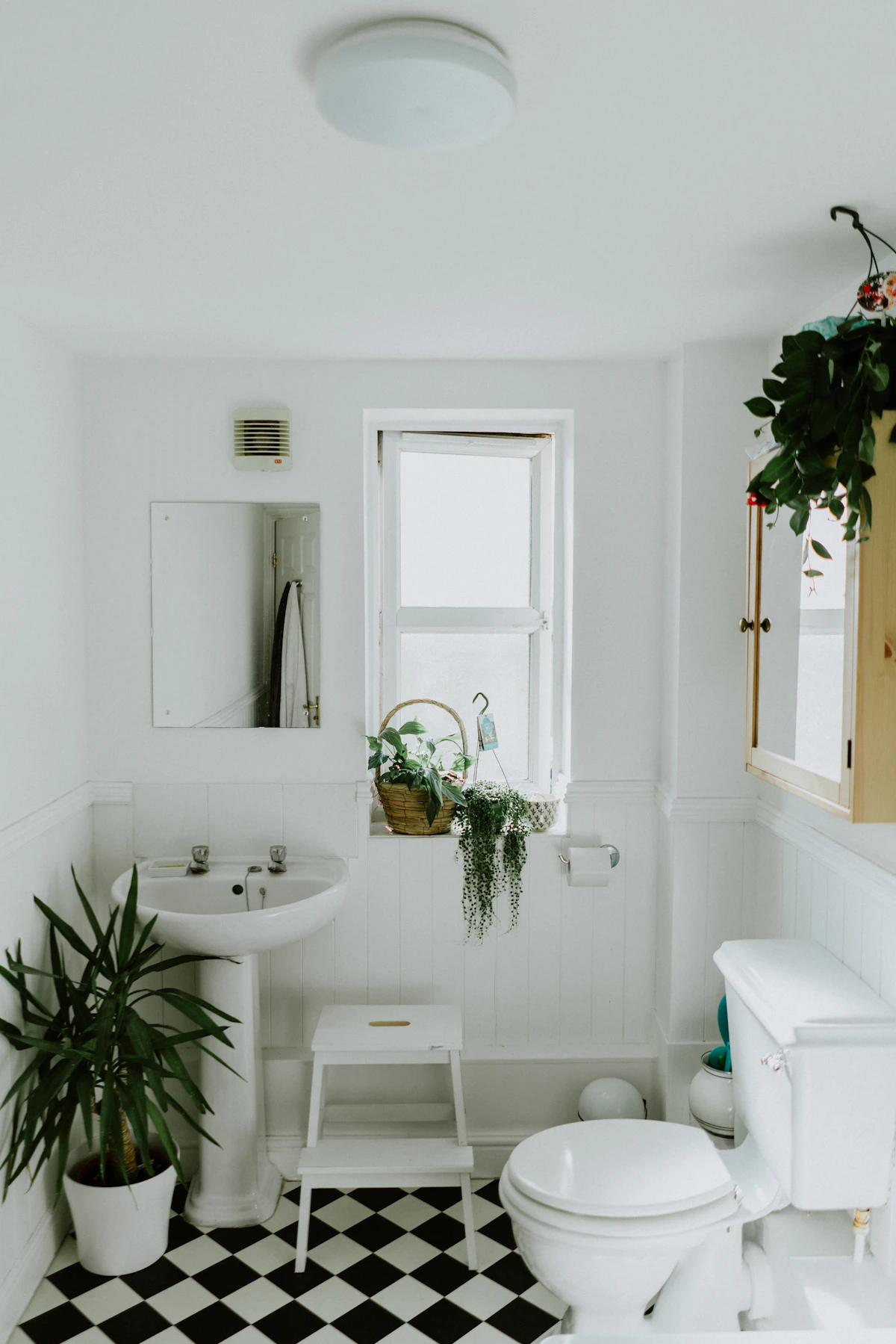
10. Complete checklist: your roadmap from D-30 to opening
Print this operational roadmap to move through each step methodically:
Week 1: Legal, administrative, and insurance
- Check the condominium bylaws (no exclusive bourgeois residential-use clause).
- Check the energy performance diagnosis (DPE class E minimum).
- Complete the preliminary declaration at the town hall and obtain the 13-character registration number.
- Create the business activity account on the single window for business formalities (INPI) to obtain the SIRET number.
- Consult a chartered accountant specializing in LMNP to validate the option for the actual tax regime.
- Take out a Non-Occupant Owner (PNO) insurance policy expressly covering short-term rentals.
Week 2: Renovation, layout, and bedding
- Install a new Queen Size bed (160×200 cm) with hotel-quality mattress.
- Order 3 complete sets of white bed linen (100% cotton) and 3 sets of thick towels per sleeping space.
- Install the smart lock with an outdoor numeric keypad on the front door.
- Install the NF EN 14604-compliant smoke detector and place the fire extinguisher in the kitchen.
- Install the Minut decibel sensor in the main room.
- Equip the kitchen with a branded coffee maker, kettle, toaster, and sealed kitchen starter kit.
Week 3: Digitalization and service providers
- Run an internet speed test on the fiber line and save a screenshot of the result.
- Set up your online welcome book (Majordia) with all practical instructions, how-to videos, and local restaurant recommendations.
- Place an elegant, discreet QR code plaque or stand in the entryway or on the coffee table.
- Recruit and train your cleaning provider based on the detailed turnover checklist.
Week 4: Photoshoot, listing, and launch
- Carry out the professional photo shoot in sunny weather.
- Create the Airbnb listing: write a clear, factual title, enter the 13-digit municipal registration number, and order the 5 main photos.
- Set pricing: activate the 20% launch discount on the first 3 bookings.
- Configure the 3 automated messages (confirmation, day-before-arrival with instructions, day-before-departure).
- Publish the listing and welcome your first guests with attention to detail.
FAQ: Frequently asked questions for getting started on Airbnb in 2026
What minimum budget is needed to start on Airbnb?
For a T2 apartment already owned or rented, plan on a starting budget between €3,500 and €6,500. This amount covers the purchase of a complete hotel-quality Queen Size bedding set with 3 spare sheet sets (€1,200 to €1,800), appliances and dishware (€800 to €1,400), the smart lock and sound sensor (€400 to €600), the professional photo shoot (€250 to €450), and administrative registration and insurance costs.
Can you rent on Airbnb without owning the property?
Yes, it is legally possible under the regime of professional subletting in furnished tourist accommodation, but it is strictly regulated. You must obtain the landlord’s prior written consent expressly authorizing tourist subletting and setting the amount of the rent passed on, in accordance with Article 8 of the law of July 6, 1989. Without written authorization, subletting is unlawful and exposes the subtenant to eviction and full repayment of the sums received to the owner.
Is it still profitable to start on Airbnb in 2026 with the Le Meur law?
Yes, the activity remains significantly more profitable than traditional unfurnished renting, with gross yield 40% to 120% higher depending on the area. The Le Meur law and stricter DPE requirements have cleaned up the market by eliminating low-quality properties and non-compliant accommodations, which stabilizes professional listing prices and increases occupancy for serious hosts who follow the rules.
What is the most advantageous tax status to start with: Micro-BIC or actual LMNP?
For more than 80% of investors, the actual tax regime (LMNP actual) is far more advantageous than Micro-BIC. With the reform lowering the non-classified Micro-BIC allowance to 30%, the actual regime allows you to depreciate the value of the walls, renovations, and furniture, wiping out all tax on rental profits for 8 to 12 years, whereas Micro-BIC heavily taxes 70% of collected revenue.
How many hours per week does short-term rental management take?
With a fully automated system (smart lock with temporary code, digital welcome book, and autonomous cleaning provider), managing a property takes between 1 and 2 hours per week, mainly devoted to guest messaging and restocking follow-up. Without automation, in-person key handover and manual cleaning require between 8 and 15 hours per week for a single apartment.
Is a smart lock mandatory for renting on Airbnb?
A smart lock is not legally mandatory, but it has become essential operationally and commercially. More than 70% of travelers prefer accommodations offering self check-in with no time constraints, and it saves the host from endless waiting caused by train delays or traffic jams.
Conclusion: Rigor, consistency, and professionalism
Getting started on Airbnb in 2026 is neither a stroke of luck nor passive income without effort. It is a full-fledged hospitality business that rewards rigorous owners who respect the legal framework and pay close attention to guest comfort.
By securing your legal steps from the outset, choosing a suitable tax regime that protects your margins, and relying on modern automation tools to simplify your guests’ stay, you build a durable, highly profitable asset and a lasting source of satisfaction.
M
Majordia Team
Short-Term Rental Guide & Strategy
Guides and resources for hosts and property managers.
All articles
Partager :
Essai gratuit
Prêt à passer au livret digital ?
1 mois gratuit : carte proposée à l’inscription (facultative). Votre livret est prêt en quelques minutes.
Créer mon livret gratuitement


