
To declare furnished rental income in France, you report the gross amount of your receipts on your income tax return, using the supplementary return 2042 C PRO and the SIRET number you obtained when you started the activity. The rest depends on two questions: is your property classified as a furnished tourist rental, and do your receipts exceed the micro-BIC ceiling? This guide follows the official pages of service-public.gouv.fr, the tax administration and its 2026 practical brochure to answer step by step.
It is aimed at non-professional furnished landlords of tourist rentals (Airbnb, Booking, direct bookings). It does not replace the advice of a chartered accountant: ceilings change from one year to the next, and your situation (other income, status, property held through a company) can change the answer.
Last verification of sources: 10 October 2026. This article is informational and is not personalised legal or tax advice. Tax rules change every year: check against your own situation before filing. Quotations from French official sources are our own translations.
Who has to declare furnished rental income?
Any owner who lets a furnished property to short-stay guests must declare that income, apart from a few special cases. According to service-public.gouv.fr (page verified on 15 April 2026), non-professional furnished landlords (LMNP, loueurs en meublé non professionnels) are taxed at the progressive income tax scale, and their income is declared as industrial and commercial profits (BIC). The page gives simple examples: letting your apartment for a weekend, or at the ski resort or the seaside.
You are treated as a non-professional landlord if one of these two conditions is met: your household's annual receipts are below €23,000, or they are below the total of the household's other earned income (salaries, other BIC). The details of the switch to professional status are in our article on LMNP and LMP status.
Micro-BIC or real regime: which one applies?
Micro-BIC is a simplified regime in which the administration applies a flat allowance to your receipts without letting you deduct your expenses; the real regime lets you deduct your expenses and depreciation. According to service-public.gouv.fr, the ceilings depend on the type of property, and the page distinguishes receipts earned in 2025 (declared in spring 2026) from receipts earned in 2026 (declared in April 2027).
| Type of furnished letting | Micro-BIC ceiling, 2025 receipts | Micro-BIC ceiling, 2026 receipts | Flat allowance |
|---|---|---|---|
| Unclassified furnished tourist rental | €15,000 | €15,000 | 30% |
| Classified furnished tourist rental or guest room | €77,700 | €83,600 | 50% |
| Other furnished letting (long term) | €77,700 | €83,600 | 50% |
Above the ceiling, the real regime applies automatically. Below it, micro-BIC applies unless you opt for the real regime: the option is then renewed automatically every year unless you withdraw it, and it had to be exercised before the filing deadline (spring 2026 for 2025 income, according to the page). If your receipts are below €305, you pay no tax under micro-BIC. The tax administration's page "Les locations meublées" on impots.gouv.fr (updated on 8 April 2026) confirms the ceilings of €15,000 for unclassified tourist rentals and €77,700 for guest rooms and classified rentals, with a 30% or 50% allowance. The 2026 practical brochure explains where these rates come from: the Le Meur law of 19 November 2024 (article 7) sets the allowance at 50% for classified rentals and guest rooms up to €77,700 of annual income, and at 30% for unclassified rentals up to €15,000.
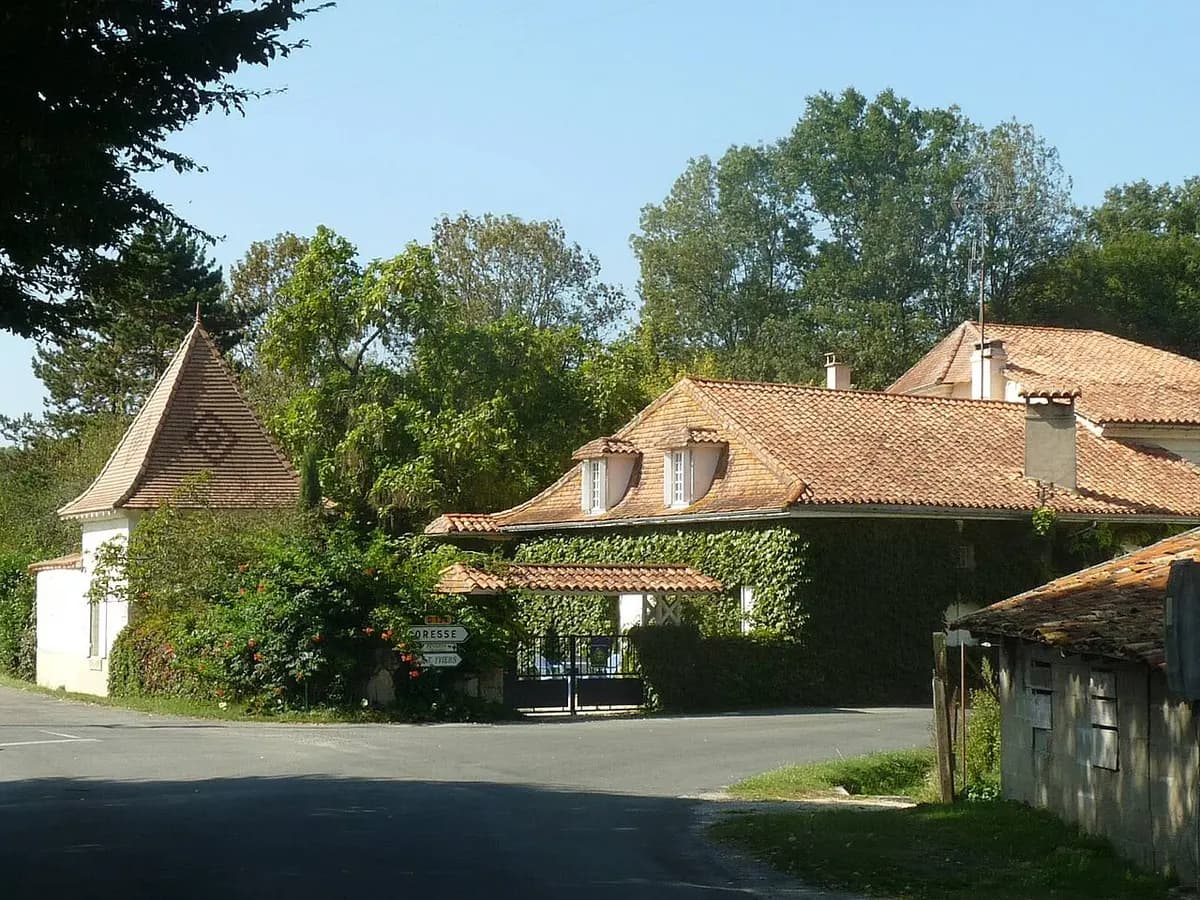
Photo: Jack ma, Wikimedia Commons, licence CC BY-SA 3.0.
Why does classification matter so much? Because a classified property can stay in the simplified regime with more than five times as much revenue (€77,700 against €15,000) and gets a higher allowance. Our guide to classification as a furnished tourist rental explains the steps.
Which form and which lines should you fill in?
Micro-BIC is declared on the supplementary return 2042 C PRO, and the real regime with form 2031-SD carried over to the 2042 C PRO. According to service-public.gouv.fr, a landlord under micro-BIC enters the gross amount of receipts online or on form 2042 C PRO, together with the SIRET number, and a landlord under the real regime fills in form 2031-SD and then carries the amounts over.
The 2026 practical brochure reproduces the 2042 C PRO return for 2025 income, where micro-BIC is declared on three lines depending on the type of letting (gross receipts, without deducting any allowance):
| Line (filer 1) | Type of furnished letting |
|---|---|
| 5NG | Letting of guest rooms and classified furnished tourist rentals |
| 5NH | Letting of unclassified furnished tourist rentals |
| 5NI | Other furnished lettings |
Filers 2 and 3 use lines 5OG, 5OH, 5OI and 5PG, 5PH, 5PI. A separate line also exists for lettings whose social contributions are collected by the social security bodies (5NJ, 5NK and 5NL for filer 1), which concerns landlords whose contributions are collected by those bodies (see the €23,000 threshold below). The administration confirms line 5NH in its leaflet "Comment déclarer mes revenus issus de la location meublée ?": gross receipts entered on the 2042 C PRO, line 5NH, with an automatic 30% allowance.
Line numbers can change from one filing campaign to the next: always use the current year's practical brochure and the online return, which fills in the right boxes according to your answers. This guide is based on the return for 2025 income, filed in spring 2026 (2026 practical brochure, form 2042 C PRO).
How do you register the activity and get a SIRET number?
Before your first income tax return, you must declare the start of the furnished letting activity on the business formalities portal (guichet des formalités des entreprises), which gives you a SIRET number. According to service-public.gouv.fr, the procedure is free and must be done within 15 days of the first day of letting; it gives you the SIRET to enter on your tax return. The SIRET remains available in your personal space on the portal, and Insee has no longer issued a registration certificate since 1 January 2023 (entreprendre.service-public.gouv.fr, page verified on 30 January 2025).
The same registration triggers another obligation: the business property contribution (CFE). It has its own calendar, presented in our guide to CFE on furnished rentals.
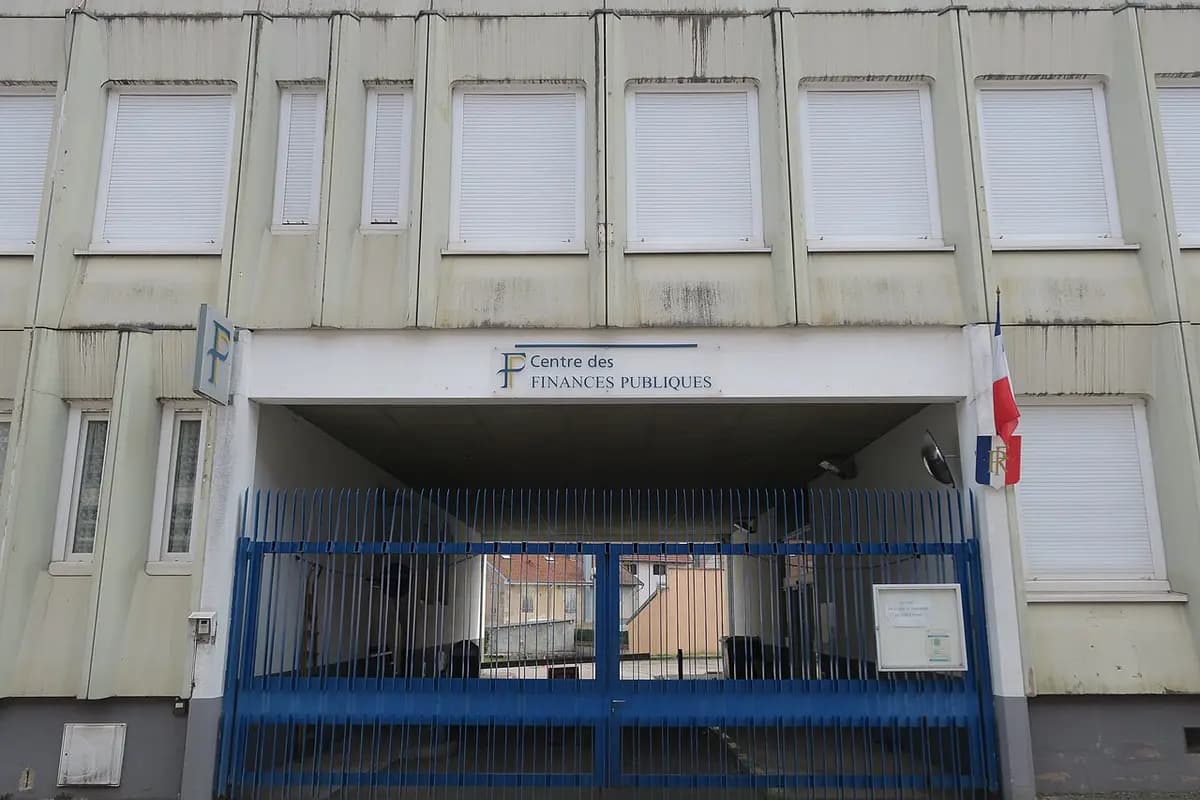
Photo: Mathieu Kappler, Wikimedia Commons, licence CC BY-SA 4.0.
What counts as receipts?
Under micro-BIC, you declare the gross amount of your annual receipts, without deducting expenses. This wording appears both on the service-public.gouv.fr page ("le montant brut de vos recettes") and in the administration's leaflet ("recettes brutes, sans déduire aucun abattement"). Since expenses are not deductible under micro-BIC, the 30% or 50% allowance is meant to cover them. On this reading, platform fees fall among the expenses covered by the allowance rather than being deducted separately. This is a point to confirm with the administration or your accountant, because platforms' annual statements sometimes show an amount net of commission.
In practice, gather everything for the calendar year:
- payouts from the platforms (Airbnb, Booking, Abritel) for the year's stays;
- direct bookings collected by transfer, card or cash;
- paid services billed to the guest and collected (in principle to be included, to be confirmed depending on the nature of the service).
Our article on taxation of short-term rentals gives the general framework, and the one on electronic invoicing explains the invoicing obligations that complement the return.
A worked example: what remains taxable?
Here is an illustrative calculation based on the official rates quoted above. Majordia calculation based on service-public.gouv.fr: with €12,000 of gross receipts, the taxable base under micro-BIC is €8,400 for an unclassified property (30% allowance) and €6,000 for a classified property (50% allowance). These amounts are added to your other income and taxed at the income tax scale: the tax therefore depends on your bracket, and this calculation does not give it.
With €20,000 of receipts, the unclassified property exceeds the €15,000 ceiling: the real regime applies automatically, with form 2031-SD. The same annual rent on a classified property stays under micro-BIC, since the ceiling is €77,700 for 2025 receipts. The administration's leaflet adds that under the real regime, if receipts exceed €37,500 and the landlord provides several para-hotel services, VAT must be charged while VAT paid on purchases can be deducted: check against your own situation.
When does the real regime become more attractive?
The real regime becomes more attractive when your actual expenses exceed the flat allowance, notably if you borrow or invest heavily. According to service-public.gouv.fr, the real regime lets you deduct the expenses incurred in the interest of the activity, provided you can justify them, for example depreciation of the purchase price of the property and furniture. A deficit can be deducted from non-professional furnished rental income of the same year and of the following 10 years; it can be deducted from overall income only for a professional landlord.
The comparison is simple to set up: add up the year's expenses (loan interest, cleaning, linen, insurance, property tax, subscriptions, depreciation) and compare them with 30% or 50% of your receipts. If they are clearly higher, the real regime deserves a simulation with an accountant. If they are lower, micro-BIC is simpler and cheaper to manage.
When do social contributions apply?
Above €23,000 of annual receipts, short-stay furnished letting triggers social contributions. According to service-public.gouv.fr (page verified on 20 February 2026), for the Urssaf the activity counts as management of private assets and gives rise to no contributions when receipts are €23,000 or less: you then pay only social levies (prélèvements sociaux). Above this threshold, "professional" furnished letting requires social contributions.
For a furnished tourist rental, the page states that below €15,000 of receipts you pay no social contributions, but you must still declare your receipts. Between €23,000 and the micro-BIC ceiling, the page asks you to register on the business formalities portal and choose an affiliation regime. These rules differ for 2025 and 2026 income: re-read the up-to-date page for the year concerned and confirm with your Urssaf.
What about letting a room in your main home?
Letting a room in your main home to short-stay guests is exempt as long as the income does not exceed €760 including tax per year. According to service-public.gouv.fr, this exemption applies to occasional letting; for habitual letting, a separate scheme, open until 31 December 2026, exempts you from declaring the income if the room let is the tenant's main residence and the rent stays within annual limits per square metre (€215 in Île-de-France and €159 in other regions for 2026 income, excluding charges). The administration's leaflet confirms the €760 per year threshold for rooms in the main home. If you let a whole property to travellers instead, this case does not apply.
Common mistakes to avoid
The most common mistakes come from a regime or ceiling that was wrongly identified, more than from a forgotten line. Here are the five most useful checkpoints:
- Mixing up classified and unclassified. The ceiling goes from €15,000 to €77,700 (€83,600 for 2026 receipts) depending on classification; check your classification decision.
- Forgetting to register the activity. Without a SIRET number, the income tax return cannot be filled in correctly.
- Deducting expenses under micro-BIC. They are not deductible: the allowance replaces them.
- Neglecting the real-regime option. It renews automatically; check it every year before the filing deadline.
- Overlooking other local taxes. The CFE and, depending on the case, the second-home housing tax add up: see our guide to housing tax and short-term letting.
Key takeaways
Information
- Receipts are declared as BIC on the 2042 C PRO: lines 5NG (classified or guest room), 5NH (unclassified) and 5NI (other furnished lettings) for filer 1.
- Micro-BIC applies a 50% allowance (classified, ceiling €77,700 for 2025 receipts, €83,600 for 2026) or 30% (unclassified, ceiling €15,000).
- Above the ceiling, the real regime applies: form 2031-SD carried over to the 2042 C PRO.
- You need a SIRET number, obtained free of charge on the business formalities portal within 15 days of the first day of letting.
- Above €23,000 of annual receipts, social contributions are added.
FAQ
Which line of the return applies to an unclassified furnished tourist rental?
It is line 5NH of the supplementary return 2042 C PRO, where you enter your gross receipts without deducting any allowance. The 30% allowance is applied automatically by the administration, with a minimum of €305 (tax administration leaflet).
My classified property exceeds €77,700 of receipts: what happens?
The real regime applies automatically. For 2025 receipts, service-public.gouv.fr states that in the first or second year of exceeding the ceiling you may use micro-BIC for one more year, with a different allowance: the page gives 71% in that case for 2025. Check your exact situation before filing, because this transitional rule depends on the year.
Can you deduct the Airbnb or Booking commission?
Under micro-BIC, expenses are not deductible: the flat allowance replaces them. Under the real regime, you deduct justified expenses, which in principle include platform fees; confirm with your accountant how your own situation is treated.
Do you have to declare receipts below €305?
Yes, you declare your receipts, but the minimum allowance of €305 brings the taxable base down to zero: no tax is due, according to service-public.gouv.fr. The €15,000 threshold concerns social contributions for a furnished tourist rental.
When should 2026 rental income be declared?
According to service-public.gouv.fr, income received in 2026 is declared in April 2027; the exact deadline depends on your département and on the campaign, published each year by the tax administration.
Is an accountant compulsory?
No, none of the sources read requires one. Under micro-BIC, the online return is generally enough. A professional becomes useful under the real regime (form 2031-SD, depreciation) or to compare micro-BIC and the real regime.
Preparing your return from the autumn
The simplest approach is to keep an annual table of your receipts, stay by stay, with the type of property (classified or not) and the gross amount collected. With the Majordia digital welcome book, each property has a welcome book accessible by QR code, with sections for Wi-Fi, door code, contacts and emergency numbers, automatically translated into six languages: it saves time during stays, but it is not a tax filing tool. The plans are detailed on the Pricing page. Majordia does not calculate your tax: for the return itself, rely on the tax administration, your Urssaf and a professional.
See also: the taxation pillar article and the Le Meur law and Declaloc for the property registration obligations.
Image credits. Cover: photo "a calculator and a pen sitting on top of a piece of paper" by Aaron Lefler, Unsplash, Unsplash licence. Illustrations: Jack ma (CC BY-SA 3.0) and Mathieu Kappler (CC BY-SA 4.0), via Wikimedia Commons; images converted to WebP and resized.


