
Letting a home to travellers in England in 2026 does not yet require a national registration number, but the UK government is preparing a mandatory register whose opening is now expected in March 2027, and the special tax regime for holiday lets has already gone. For a host, or for a property manager looking after a property across the Channel, the sensible approach fits in one sentence: apply today the safety, planning and tax rules that already exist, and get ready to sign up to the future register.
This article is written for hosts who let property in England. It draws on the GOV.UK guidance "Letting out a self-catering holiday home in England", on the HM Revenue and Customs (HMRC) pages about the end of the Furnished Holiday Lets regime, on GOV.UK's tax guidance for rental income and, for Scotland, on the Scottish Government's pages. Wales and Northern Ireland have their own rules, which we have not covered.
Last verification of sources: 13 October 2026. This article is informational and is not personalised legal or tax advice. Rules can change, in particular the register's start date: check your own situation and your local authority.
Which rules apply to a holiday let in England in 2026?
A holiday let in England is subject to several rules that add up: the future national register, local planning, tax on rental income, the safety of the property and insurance. The reference document is the GOV.UK guide "Letting out a self-catering holiday home in England: rules and regulations" on GOV.UK, published on 25 March 2026 and updated on 2 October 2026. It is aimed at owners who let a self-catering property (cottages, apartments, lodges or similar) to paying guests for leisure or holiday stays, and it applies to England.
The guide lists, in this order: registration (not yet in force), planning permission, business rates, tax, fire safety, gas and carbon monoxide safety, electrical safety, TV and music licences, the energy performance certificate (EPC), insurance, and contacting your local authority. The table below sums up who decides what.
| Topic | Who sets the rule | Status in October 2026 |
|---|---|---|
| National register of short-term lets | UK government | Announced, not yet in force |
| Planning permission | Local planning authority (the council) | In force, decided case by case |
| Business rates or council tax | Local authority | In force, depending on how the property is rated |
| Tax on rental income | HMRC | FHL regime abolished since April 2025 |
| Safety (fire, gas, electrics) | Official legislation and guides, including the HSE | In force |
| Insurance | The host's choice, recommended by GOV.UK | To be taken out |
Is the national register mandatory today?
No: the national register of short-term lets in England is not yet in force. The GOV.UK guide files it under the heading "Register your property (not yet in force)", says the government is introducing a mandatory national registration scheme for England, and states, in its update of 2 October 2026, that it is now expected to begin in March 2027. The word "now" suggests the date was revised in that update, so do not build an investment calendar on it.
Why a register? According to the government's April 2023 press release, the aim is to find out how many short-term lets exist and where they are, so that their impact on local communities can be measured. According to the page of the earlier call for evidence, close to 4,000 responses showed support for a "light touch" register, and the legislation enabling it was introduced through the Levelling Up and Regeneration Bill in December 2022.
What we cannot tell you today: the format of the number, its cost, which properties are covered and the penalties. The pages we read do not set them out, and we could not read the GOV.UK page explaining how the future register will work. Any figure on these points would be an invention: follow the official page and your local council.
France already has a comparable system: see our article on the Le Meur law and the Declaloc declaration for the French registration rules, which have no value in England.
What does the end of the Furnished Holiday Lets regime change?
Since 6 April 2025, the special Furnished Holiday Lets (FHL) tax regime no longer exists: an English host is taxed like an owner letting an ordinary residential property. HMRC presents this measure as the removal of the tax advantages that short-term holiday landlords had over those providing standard residential property. The GOV.UK guide adds that, from the 2025 to 2026 tax year, all income from self-catering holiday accommodation is taxed under the usual landlord rules and the former FHL reliefs no longer apply.
The HMRC manual gives the dates on its page PIM4170: the FHL rules cease to apply in tax years commencing on or after 6 April 2025 for Income Tax and Capital Gains Tax, and on or after 1 April 2025 for Corporation Tax. It also provides transitional cases for the last year: for a letting that began in 2024-25, the period over which the occupancy tests apply can extend beyond 5 April 2025, and averaging and period-of-grace elections remain available for 2024-25.
| Point | Former FHL regime | From 2025-26 |
|---|---|---|
| Tax treatment | Special regime for holiday lets | Residential rental income rules |
| Occupancy tests (including 105 days of letting) | Conditions to qualify for the regime | No longer relevant, except transitional 2024-25 cases |
| Official source | HMRC, manual PIM4100 and following | GOV.UK and HMRC, PIM4170 |
This article does not detail the figures (depreciation, finance costs, capital gains): they depend on each owner's situation, and we have only read the official presentation of the measure. For a comparison with French tax, see our guide to short-term rental taxation.
When do you have to declare your rental income?
For a property you own personally, the first £1,000 of rental income is tax-free. The GOV.UK page "Renting out your property: Paying tax and National Insurance" calls it the "property allowance". Between £1,000 and £2,500 of income a year, it asks you to contact HMRC. You must report your income on a Self Assessment tax return above £2,500 after allowable expenses, or £10,000 before expenses. A host who does not usually send a tax return must register by 5 October following the tax year concerned.
| Annual gross rental income (property owned personally) | Step set out by GOV.UK |
|---|---|
| £1,000 or less | Tax-free (property allowance), no return needed in this case |
| More than £1,000 and up to £2,500 | Contact HMRC |
| More than £2,500 after expenses, or more than £10,000 before expenses | Self Assessment return |
The GOV.UK page on tax-free allowances adds that the allowance is £1,000 per tax year and exists for property income and, separately, for trading income. It cannot be used in every case: read the section "When you cannot use the allowances" before relying on it, because some situations are excluded. The thresholds above apply to individuals. A company or a property-management structure is subject to other rules that we do not detail here.
Do you need planning permission to let short term?
It depends on the local authority: in England, the local planning authority decides, case by case, whether your short-term use needs planning permission. The GOV.UK guide puts it this way: the decision is based on how the property is used for short-term letting and its impact on neighbours and the local area. It invites you to contact the council to confirm whether permission is needed.
In 2023, the government proposed creating a specific use class for short-term lets, with some flexibility for owners who let out the home they live in for a number of nights a year (30, 60 or 90 nights were under consultation), according to the April 2023 press release. The 2026 guide does not mention a national use class: it refers you to the local decision. We could not read the Mayor of London's official page on the rules specific to Greater London: if your property is there, check the night limit with your council before the first booking.
Business rates or council tax: which local tax applies to your property?
If your property is rated as a self-catering business, you may have to pay business rates instead of council tax. That is the wording of the GOV.UK guide: if your property is rated as a self-catering business, business rates may replace council tax. The guide links to two detailed pages, one on business rates for holiday lets and one on how they are valued. We give no threshold here because we did not read one in the pages consulted.
What safety obligations apply to a holiday let?
Safety is the most concrete part of the rules: GOV.UK asks you to follow the guidance on fire, gas and carbon monoxide, and electrics. The GOV.UK guide links to a separate official guide for each.
| Topic | What the GOV.UK guide says |
|---|---|
| Fire | Guide on making small paying guest accommodation safe from fire (no more than 10 people or 2 floors); national sleeping accommodation fire safety guidance for larger or more complex properties |
| Gas and carbon monoxide | Follow the Health and Safety Executive (HSE) guidance on gas safety for landlords and letting agents, and on smoke and carbon monoxide safety |
| Electrics | Follow the HSE guidance and the guidance on electrical safety standards in the private and social rented sectors |
| Energy performance certificate (EPC) | Check whether an EPC is needed, with a link to the official guidance |
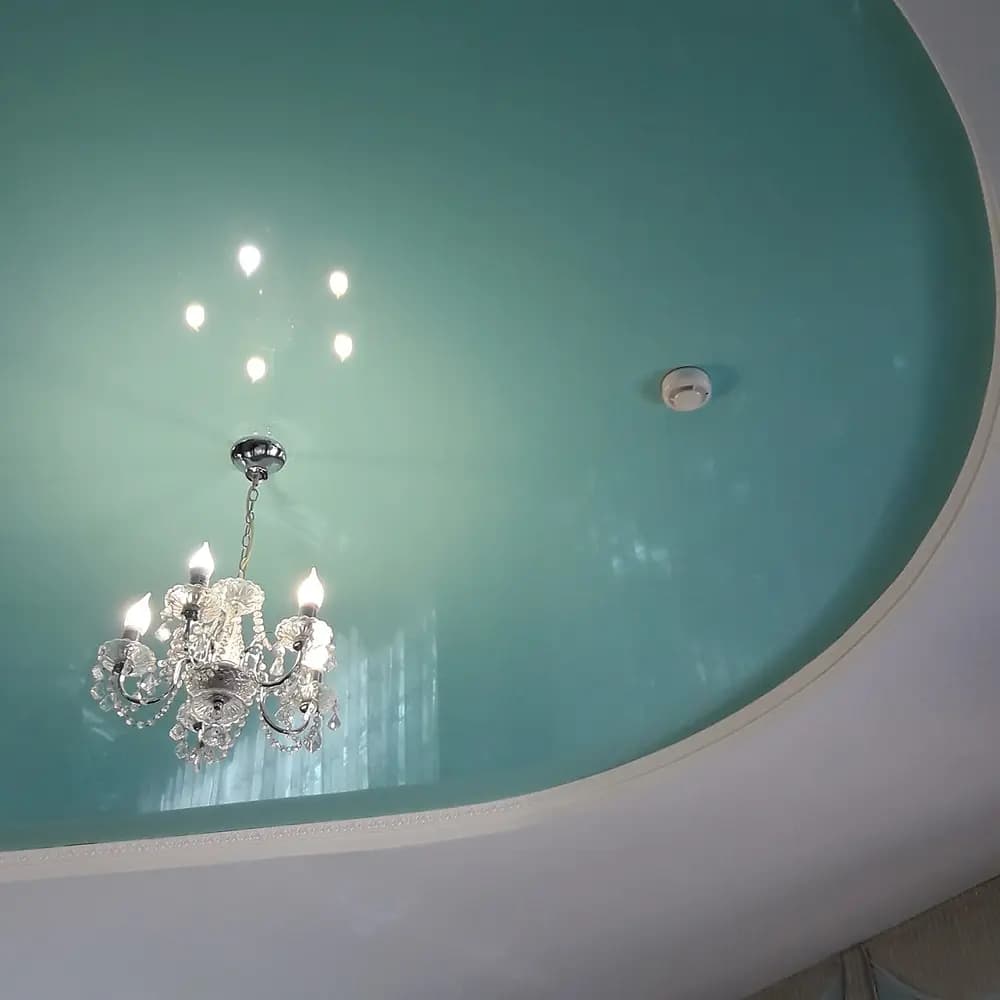
Photo: Georg Pik, Wikimedia Commons, CC0 1.0 licence.
For a comparison with the French rules on smoke detectors and safety, see our guide to fire safety in a tourist furnished rental.
Which insurance and licences should you plan for?
GOV.UK says you should have dedicated holiday-let insurance, public liability cover, and building and contents cover suitable for short-term letting. An update of 7 April 2026 to the guide specifies that short-term lets should be insured. The page also invites you to check the local rules on holiday-let insurance.
As for licences, the guide mentions two cases: if you provide TVs, a TV Licence may be needed, and if you play recorded or live music outside the private or domestic exemption, a music licence may be needed too.
What about Scotland? A licence is mandatory
In Scotland, you need a short-term let licence issued by the local council, whatever the length of the let. The Scottish Government's page on short-term let regulation, updated on 15 May 2026, says the law changed on 1 October 2022, that new hosts must obtain a licence before accepting bookings or receiving guests, and that the scheme is mandatory for all short-term let accommodation across the country: holiday cottages, B&Bs, guest houses, rooms within a home, and also pods and yurts. A licence is required whether the let lasts one night or several months.
According to the mygov.scot page (updated on 9 October 2025), a licence usually lasts 3 years, and operating without one is a criminal offence punishable by a fine of up to £2,500, with a possible one-year ban on applying for a licence.
The Scottish Government also explains that each council publishes its own policy and can designate control areas: Edinburgh became the first control area on 5 September 2022, and the Badenoch and Strathspey ward (Highland) followed on 4 March 2024. In a control area, a planning condition can be added to the licence application.
How do you prepare your property before the register opens?
The best preparation comes down to five actions, all possible today:
- Contact your local council to find out whether planning permission is needed, whether business rates replace council tax, and whether local rules apply on top.
- Check safety: smoke and carbon monoxide detectors, gas and electrical safety, and whether an EPC is needed.
- Take out insurance suited to short-term letting, including public liability.
- Sort your income: keep your receipts and expenses separate, for the Self Assessment return if your income exceeds the thresholds.
- Watch the GOV.UK page "Register your property": that is where the details and the opening date will be published.
How do you welcome foreign guests in an English property?
A British host welcomes travellers of every nationality, and part of the safety information (emergency exit, detectors, gas shut-off) must be understood right on arrival. The Majordia digital welcome book gives each property a guide accessible by QR code, with sections for Wi-Fi, door code, contacts and emergency numbers, automatically translated into six languages: you can place your safety and welcome instructions there, with nothing to print. Our guide to welcome-book languages explains how to choose the useful languages. Majordia does not guarantee that a property complies with British rules: it helps you pass instructions on to your guests.

Multilingual welcome sign in Méribel (Savoie), photo by DimiTalen, Wikimedia Commons, CC0 licence; image converted to WebP and resized.
The essentials
Information
- English national register: announced, not yet in force; start now expected in March 2027 (GOV.UK, update of 2 October 2026). Format, cost and penalties: not set out in the pages consulted.
- Tax: the Furnished Holiday Lets regime has been abolished since 6 April 2025 (Income Tax and Capital Gains Tax); income is taxed like residential letting from the 2025-26 tax year.
- Thresholds for a personally owned property: £1,000 tax-free; contact HMRC between £1,000 and £2,500; Self Assessment above £2,500 after expenses or £10,000 before expenses.
- Planning and local taxes: the local council decides on planning permission; business rates may apply instead of council tax.
- Safety and insurance: fire, gas and carbon monoxide, electrics, EPC to check; dedicated insurance recommended.
- Scotland: licence mandatory since 1 October 2022, whatever the length of the let; fine of up to £2,500 possible.
FAQ
Do you need a registration number to let in England in 2026?
Not yet at national level: the register is announced but "not yet in force" according to GOV.UK, with a start now expected in March 2027. Your local council may nonetheless have its own rules: contact it before publishing a listing.
Does the FHL regime still exist?
No. It has been abolished: the FHL rules cease to apply in tax years commencing on or after 6 April 2025 (Income Tax and Capital Gains Tax) and on or after 1 April 2025 (Corporation Tax), according to HMRC. Transitional cases exist for 2024-25.
Do I have to declare £1,500 of rental income?
Between £1,000 and £2,500 of rental income a year, GOV.UK asks you to contact HMRC for a property you own personally. Above £2,500 after expenses, or £10,000 before expenses, a Self Assessment return is needed. Check your situation with HMRC.
Is a licence needed in England as in Scotland?
Not as things stand: the mandatory licence is a Scottish scheme. In England, the forthcoming scheme is a national register, which is not a licence in the Scottish sense. The details of the future register are not yet known.
How many nights can you let without planning permission?
It depends on the local planning authority and the area. The numbers of nights mentioned in 2023 (30, 60 or 90) were a proposal under consultation, not a national rule found in the 2026 guide. Ask your council, in London in particular.
What if my property is in Wales or Northern Ireland?
Those two nations have their own rules, which this article does not cover. Consult the official websites of their governments and of your local authority.
Getting ready without waiting for March 2027
The most useful thing today is to deal with what is already mandatory (safety, insurance, tax, local planning) and to follow the official page of the future register. If you manage several properties or your guests come from several countries, a multilingual digital welcome book makes safety instructions available from the moment of arrival; the plans are detailed on the Pricing page.
Image credits. Cover: photo "Stone cottage with thatched roof surrounded by trees" by Tanya Barrow, Unsplash, Unsplash licence. Illustrations: Georg Pik (CC0 1.0) and DimiTalen (CC0), via Wikimedia Commons; images converted to WebP and resized.


